A grower may say that a greenhouse is too hot, while a contractor may say that the covering is not providing enough protection from rain. Both problems can occur in the same structure because greenhouse plastic and shade cloth are often treated as if they were interchangeable. They are not.
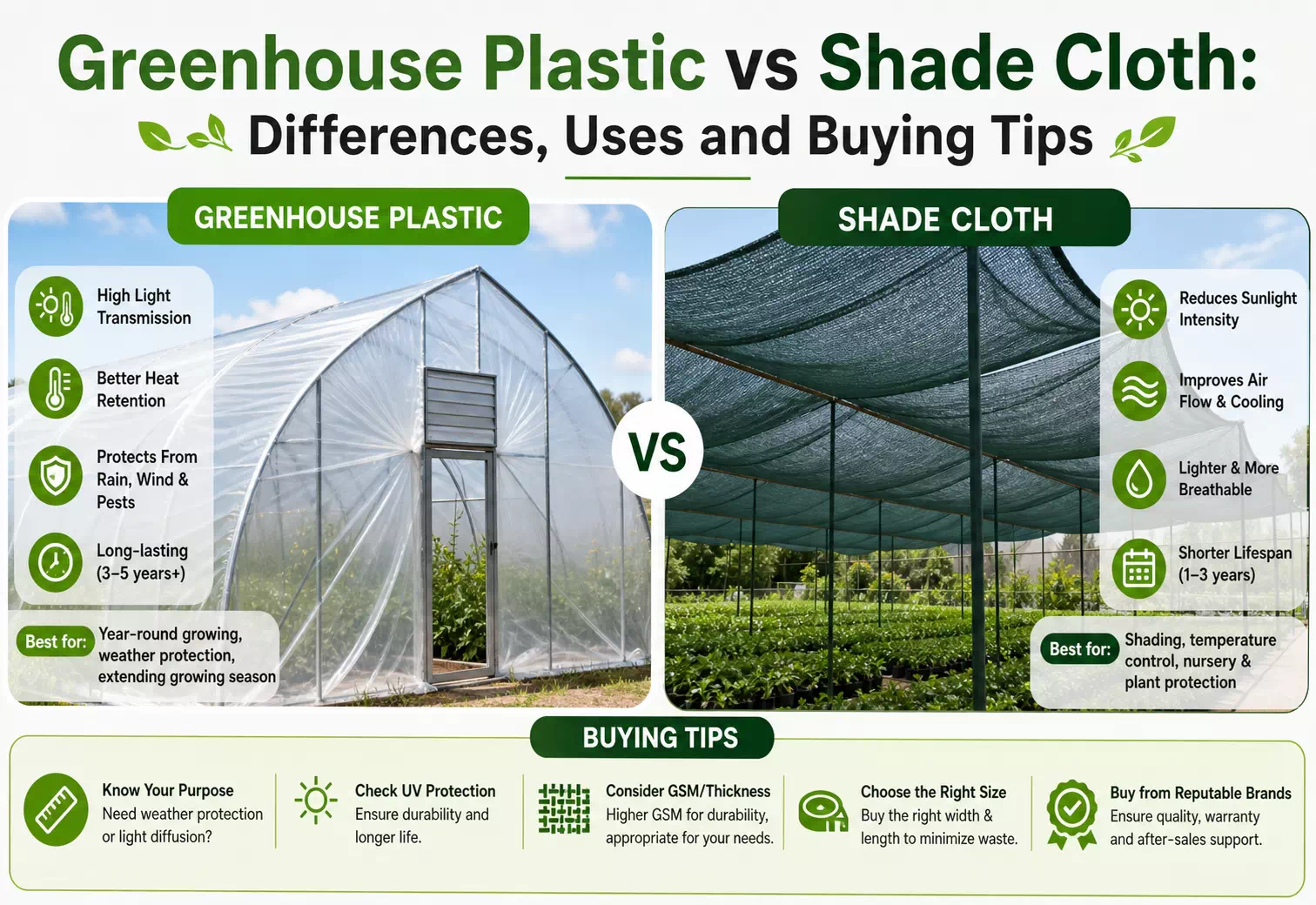
Greenhouse plastic is mainly a covering material. Shade cloth is mainly a light and heat management material. Plastic can help create a protected growing environment, while shade cloth can reduce direct solar load and soften harsh light. In many projects, the sensible solution is to use one, the other, or both at different times of the year.
The right choice depends on the crop, climate, season, greenhouse design and required level of protection. Before placing a bulk order, confirm the material specification, installation position, ventilation plan and coverage area rather than choosing from the product name alone.
Short answer: Choose greenhouse plastic when rain protection, enclosure or seasonal coverage is the main requirement. Choose shade cloth when the main problem is strong sunlight and heat. If a project needs both functions, greenhouse plastic and shade cloth can be combined, provided the structure has enough ventilation and suitable fixing points.
What Is Greenhouse Plastic?
Greenhouse plastic is a flexible film used to cover a greenhouse structure. Depending on its formulation and specification, it may help protect crops from rain, wind and outside weather while allowing light to enter the growing area.
The exact performance depends on details such as film type, thickness, light transmission, ultraviolet treatment, installation quality and the design of the greenhouse. A covering film does not automatically produce the same result in every climate. A poorly ventilated greenhouse can still become excessively hot even when the plastic is suitable for the structure.
Greenhouse plastic is generally considered when the project needs to create a covered environment. It may be used for seasonal growing, nursery production, vegetable production or other agricultural applications that require a physical cover above the crop.
Its main practical strengths are:
•Protection from rain and direct outdoor exposure.
•A continuous covering over the greenhouse frame.
•Support for a more controlled growing environment.
•Compatibility with planned ventilation, irrigation and crop-management systems.
•A primary covering solution for many greenhouse structures.
These strengths come with responsibilities. The film must be fixed correctly, the structure must handle local weather conditions, and ventilation openings must be planned before the covering is installed. A covering that blocks rain but traps hot air may create a new management problem.
What Is Shade Cloth?
Shade cloth, also called shade net or shade netting, is a knitted or woven mesh material designed to reduce direct sunlight reaching a crop, working area or covered structure. Its performance is commonly discussed using a shade percentage, but shade percentage is not the same as temperature reduction and does not describe every aspect of the material.
Shade cloth can be installed above a greenhouse, inside the structure, on the sides or over an open-sided growing area. The most suitable position depends on the greenhouse design, local wind, access for maintenance and the amount of heat that needs to be managed.
When evaluating shade cloth, buyers should look beyond color. The practical specification may include:
•Shade percentage.
•Material, such as high-density polyethylene (HDPE), where applicable.
•Flat-wire or round-wire construction.
•Grammage or weight.
•Available width and length.
•UV treatment and outdoor-use requirements.
•Edge finishing and reinforcement.
•Fixed, removable or retractable installation.
A higher shade percentage is not automatically better. Excessive shading can reduce useful light, particularly during cloudy weather or in regions with limited solar radiation. Shade cloth also cannot replace ventilation. If hot air has nowhere to escape, changing the color or increasing the shade level may not solve the underlying problem.
For a detailed explanation of shade percentage, see How to Choose the Right Shade Cloth Percentage for Your Greenhouse. Crop-specific considerations are covered in Shade Cloth for Tomatoes and Peppers: How to Choose and Install It.
Greenhouse Plastic vs Shade Cloth: Main Differences
The simplest way to compare the two materials is to start with the job each one is expected to perform.
Comparison factor | Greenhouse plastic | Shade cloth |
Main function | Covers the greenhouse and helps protect the growing area | Manages direct sunlight and solar heat load |
Rain protection | Usually the stronger option for continuous rain protection | Usually limited and not intended to act as a complete roof cover |
Light management | Depends on film type and light-transmission specification | Directly related to shade percentage, material and installation |
Airflow | May reduce natural airflow when the structure is enclosed | Mesh allows air to pass, but airflow still depends on the structure |
Heat management | Can contribute to heat buildup if ventilation is inadequate | Can reduce direct solar load but cannot remove trapped hot air |
Seasonal handling | Often installed as a primary or semi-permanent cover | Often removable, adjustable or seasonal |
Key installation concerns | Film tension, fixing, seams, frame and ventilation openings | Tension, edge fastening, support points, wind exposure and access |
Main buying information | Film type, thickness, dimensions, UV treatment and light transmission | Shade percentage, material, width, construction, UV treatment and edge finish |
When Greenhouse Plastic Is the More Suitable Choice
When the project needs rain protection
If the crop must remain protected from rain, greenhouse plastic is usually a more direct solution than an open mesh. This matters for crops that require a managed irrigation schedule, for structures used during wet seasons and for projects where rain exposure can damage the crop or interrupt production.
The film must still be matched to the frame and local weather. Water can enter through poorly fixed edges, damaged areas or open ventilation sections. The covering plan should therefore include drainage, fastening and inspection rather than treating the film as a simple sheet placed over the structure.
When the greenhouse needs a primary cover
A greenhouse normally needs a continuous covering system before additional shading is considered. Plastic can form the main boundary between the crop and the outside environment. Shade cloth may then be added above or inside the structure when the season or crop requires lower light intensity.
This layered approach is common in projects where the requirements change throughout the year. The main cover handles enclosure and weather exposure; the shade layer handles part of the light-management requirement.
When the project extends the growing season
Some growers use greenhouse structures to begin production earlier, continue production later or protect young plants during unstable weather. In these situations, the primary covering is part of the structure's environmental-control plan.
The result depends on more than the film. Temperature, ventilation, humidity, crop stage and local weather all affect the growing environment. A covering can support the system, but it does not remove the need for active management.
When the structure has planned ventilation
Plastic and ventilation must be considered together. Roof vents, side vents, roll-up sections and fans may be needed to remove heat and humidity. The required arrangement depends on the greenhouse size, crop, climate and operating method.
Before ordering, confirm where the vents are located and how the film will be fixed around them. A covering specification that ignores openings and access points can lead to installation problems later.
When Shade Cloth Is the More Suitable Choice
When strong sunlight is the main problem
Shade cloth is a practical option when the existing structure already provides basic coverage but the crop receives excessive direct sun during part of the day or season. It can reduce the amount of solar radiation reaching the crop and may make the growing area easier to manage during hot periods.
The correct shade percentage depends on the crop and conditions. A seedling area, a commercial vegetable greenhouse and an open nursery may require different starting specifications. The decision should be checked against the crop's light needs, local climate and available airflow.
When the growing area must remain ventilated
The mesh structure of shade cloth allows air movement through the material. This can be useful for open-sided structures, nurseries and greenhouses where natural ventilation remains part of the cooling plan.
Mesh should not be treated as a guarantee of good airflow. The greenhouse can still hold hot air if vents are blocked, the cloth is installed too close to openings or the structure has insufficient air exchange. Look at the whole path of air rather than the material alone.
When seasonal adjustment is important
A fixed shade cloth may work during the hottest part of the year but reduce useful light during a cooler or cloudy period. For seasonal production, a removable, retractable or divided arrangement may offer more control.
The choice affects both the material and the support system. Buyers should confirm how the net will be rolled, folded, stored, tensioned and reinstalled. These details are especially important for commercial operations where repeated handling can affect labor time and material life.
When an open-sided structure needs partial shade
Nurseries, garden structures and some agricultural areas need shade without becoming enclosed. Shade cloth can be installed over the roof or selected sides while retaining a more open growing environment.
The design should account for wind. External shade cloth needs reliable edge fastening, suitable tension and enough structural support. A product can be appropriate for shading but still fail in service if it is installed without considering local wind exposure.
Can You Use Greenhouse Plastic and Shade Cloth Together?
Yes. In many projects, the two materials are complementary rather than competing options.
Greenhouse plastic as the main cover with external shade cloth
This arrangement can provide a continuous weather cover while placing the shade layer outside the greenhouse. External shade cloth may intercept part of the direct sunlight before it reaches the plastic and growing area.
The structure must be designed for the additional wind exposure and fixing points. The buyer should confirm the distance between the shade cloth and plastic, the edge treatment, drainage path and maintenance access.
Greenhouse plastic with internal shade cloth
Internal shade cloth can be easier to handle in some greenhouse designs. It may be divided by growing zone or installed so that it can be removed when more light is needed.
Internal installation also has limits. The space above the crop may be restricted, fans and vents must remain accessible, and the system must not interfere with irrigation or other equipment. The supplier or installer should review the actual structure rather than relying on a generic installation diagram.
Shade cloth over an open-sided structure
Some projects do not require a fully enclosed greenhouse. A shade structure with open sides may provide a balance between light reduction and natural ventilation. This can suit nurseries, outdoor plant areas and selected agricultural applications.
The decision still requires a clear specification. Confirm the shade percentage, width, edge finishing, support spacing, fastening method and expected weather exposure before requesting a quotation.
How Climate and Crop Change the Decision
The same material can perform differently in different regions. A greenhouse in a hot, bright climate may need a planned shade layer during summer. A greenhouse in a cool or cloudy region may need to preserve as much useful light as possible and avoid excessive shading.
In a hot climate, review the complete heat-management system. This includes the covering, vents, fans, installation position, crop density, irrigation and the timing of shade. A higher shade percentage may reduce direct light, but it will not correct poor air exchange.
In a low-light climate, avoid choosing a dense shade cloth simply because it is common in another market. The crop may need more available light during much of the production period. Seasonal or removable shading may be more suitable than permanent coverage.
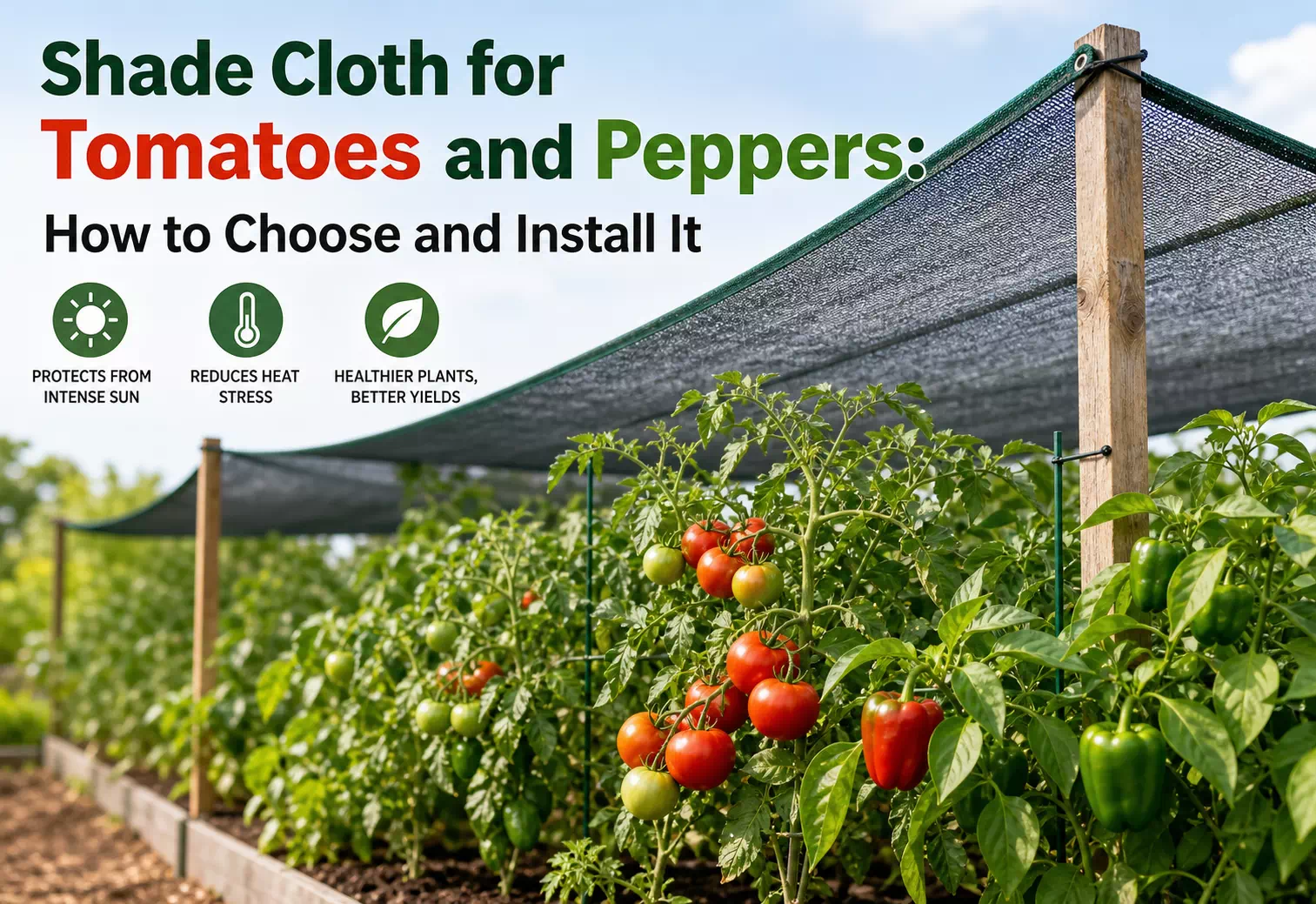
Crop stage also matters. Young plants may require different light management from mature plants. Tomatoes and peppers can face heat-related production problems during hot periods, but their response depends on cultivar, climate, ventilation, irrigation and crop stage. Read Shade Cloth for Tomatoes and Peppers before selecting a specification based only on the crop name.
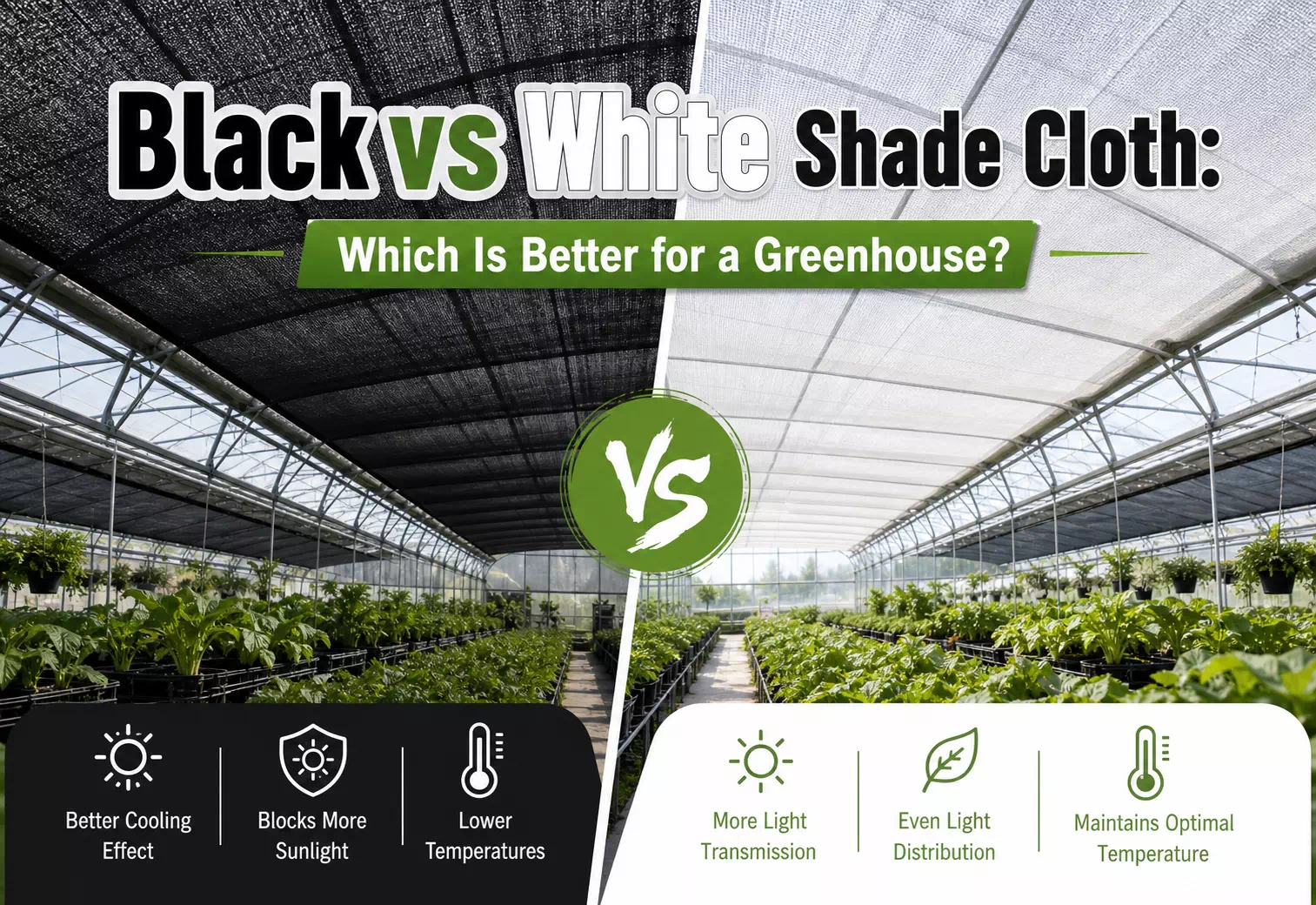
Color is another variable, but it should come after the application and shade level have been defined. The comparison in Black vs White Shade Cloth explains why two colors should be compared using similar material, construction and shade percentage.
What to Confirm Before Ordering
A supplier can recommend a more suitable covering when the project information is specific. Send the following details with the inquiry:
Project information | Why it matters |
Country and growing climate | Helps frame the discussion about heat, rain, wind and seasonality |
Crop and growth stage | Helps determine light and environmental priorities |
Greenhouse length and width | Establishes the basic coverage area |
Roof shape and side height | Affects measurement, cutting and installation |
Main requirement | Clarifies whether the priority is rain protection, shade, enclosure or a combination |
Installation position | Identifies internal, external, roof, side or open-area use |
Shade percentage, if known | Provides a starting point without treating the number as universal |
Required width and length | Supports production and packaging planning |
Material and construction preference | Helps compare available product structures |
Edge and fixing requirements | Reduces problems during installation |
Estimated quantity | Supports MOQ, packaging and shipping discussion |
Destination and target date | Allows the supplier to review delivery requirements |
Common Buying Mistakes
Treating shade cloth as a replacement for greenhouse plastic
Shade cloth is designed to manage light, not to provide the same continuous weather enclosure as a greenhouse film. If the project needs full rain protection, review the primary covering first.
Assuming greenhouse plastic solves overheating
A film may protect the crop from rain while allowing the interior to heat up. Check the ventilation and heat-removal plan before assuming that a different film alone will solve the problem.
Choosing by color before defining the application
Color can influence the appearance of the covered area, but it does not define the shade percentage, material, width or installation method. Start with the application and environmental conditions.
Comparing shade percentage with temperature reduction
A shade percentage describes the shading characteristic of the material under a defined testing or product specification context. It does not mean that the greenhouse temperature will fall by the same percentage. Temperature also depends on airflow, humidity, structure, weather and crop density.
Ignoring wind and fixing details
External nets and films are exposed to wind loads. Weak edges, insufficient tension or unsuitable fastening can shorten service life or damage the structure. Confirm the fixing system with the installer and supplier.
Ordering without checking actual dimensions
Nominal size may not answer whether the material will cover a curved roof, side section or overlap area. Measure the structure, identify fixing points and include the required installation allowance before confirming the quantity.
Frequently Asked Questions
Is greenhouse plastic better than shade cloth?
Neither is automatically better. Greenhouse plastic is generally used as a primary cover for weather protection and a more controlled growing environment. Shade cloth is used mainly to manage strong sunlight and heat. The correct choice depends on the project's main requirement.
Can shade cloth protect a greenhouse from rain?
Shade cloth is not normally selected as a complete rainproof greenhouse cover. Some mesh materials may reduce the impact of light rain, but performance depends on the structure and product design. If reliable rain protection is required, discuss a suitable greenhouse covering rather than relying on shade netting alone.
Can I install shade cloth over greenhouse plastic?
It can be possible to install shade cloth over greenhouse plastic, but the structure must support the additional fixing and wind exposure. Check the spacing, tension, edge finishing, drainage and maintenance access before installation.
Should shade cloth go inside or outside a greenhouse?
Both positions can be used, depending on the structure and operating requirements. External installation may intercept direct sunlight before it reaches the greenhouse covering, while internal installation may be easier to adjust in some projects. Review wind, vents, access, fixing points and maintenance before choosing.
What shade percentage should I use over a greenhouse?
There is no single percentage that suits every greenhouse. Begin with the crop, local climate, season, greenhouse position, light level and airflow. Use a practical starting specification and confirm it with a sample or qualified local recommendation before a large order.
Can I use the same covering all year?
Some projects use a fixed covering all year, but seasonal production may benefit from an adjustable system. A shade level that works during hot, bright weather may reduce useful light during cooler or cloudy periods. Removable, retractable or divided coverage can provide more flexibility.
What should I send a manufacturer for a quotation?
Send the application, crop, country, greenhouse dimensions, installation position, preferred material, required shade percentage if known, color, width, length, quantity, packaging requirements, destination and target delivery date. The more complete the information, the more useful the quotation is likely to be.
Final Buying Checklist
Before ordering greenhouse plastic, shade cloth or a combination of both, confirm these points:
1.What is the main problem: rain, strong sunlight, heat, wind or seasonal coverage?
2.Does the project need a continuous greenhouse cover?
3.What crop and growth stage will the material serve?
4.What are the local climate and seasonal conditions?
5.Where will the material be installed?
6.How will hot air leave the structure?
7.What dimensions, overlaps and fixing allowances are required?
8.What material, shade percentage, width, length and edge treatment are available?
9.Will the system be fixed, removable, retractable or divided into zones?
10.Can the supplier provide a comparable sample and specification sheet?
Request a Greenhouse Covering Recommendation
Choosing between greenhouse plastic and shade cloth is easier when the material is matched to the actual job. Plastic can serve as the primary covering when the project needs weather protection and a more controlled enclosure. Shade cloth can help manage strong sunlight when the structure requires additional light and heat control. Some projects need both.
Send us your crop, location, greenhouse dimensions, climate, installation position, preferred shade percentage and estimated quantity. The Dawei team can help you review a suitable shade net specification and discuss the covering options for your project.
For manufacturer information and available agricultural netting solutions, visit Dawei Shade Net. Confirm the final product specification, dimensions, packaging and delivery terms with the sales team before placing a bulk order.