There is nothing more frustrating for a gardener than watching tomato and pepper plants thrive in early summer, only to see the fruits develop ugly, bleached blisters in July. This condition, known as sunscald, along with sudden blossom drop, can decimate your harvest just as it is about to peak.
While tomatoes and peppers are famously sun-loving plants, there is a distinct difference between "full sun" and "extreme heat stress." When mid-summer temperatures consistently exceed 85°F to 90°F (29°C - 32°C), the intense UV radiation becomes their worst enemy.
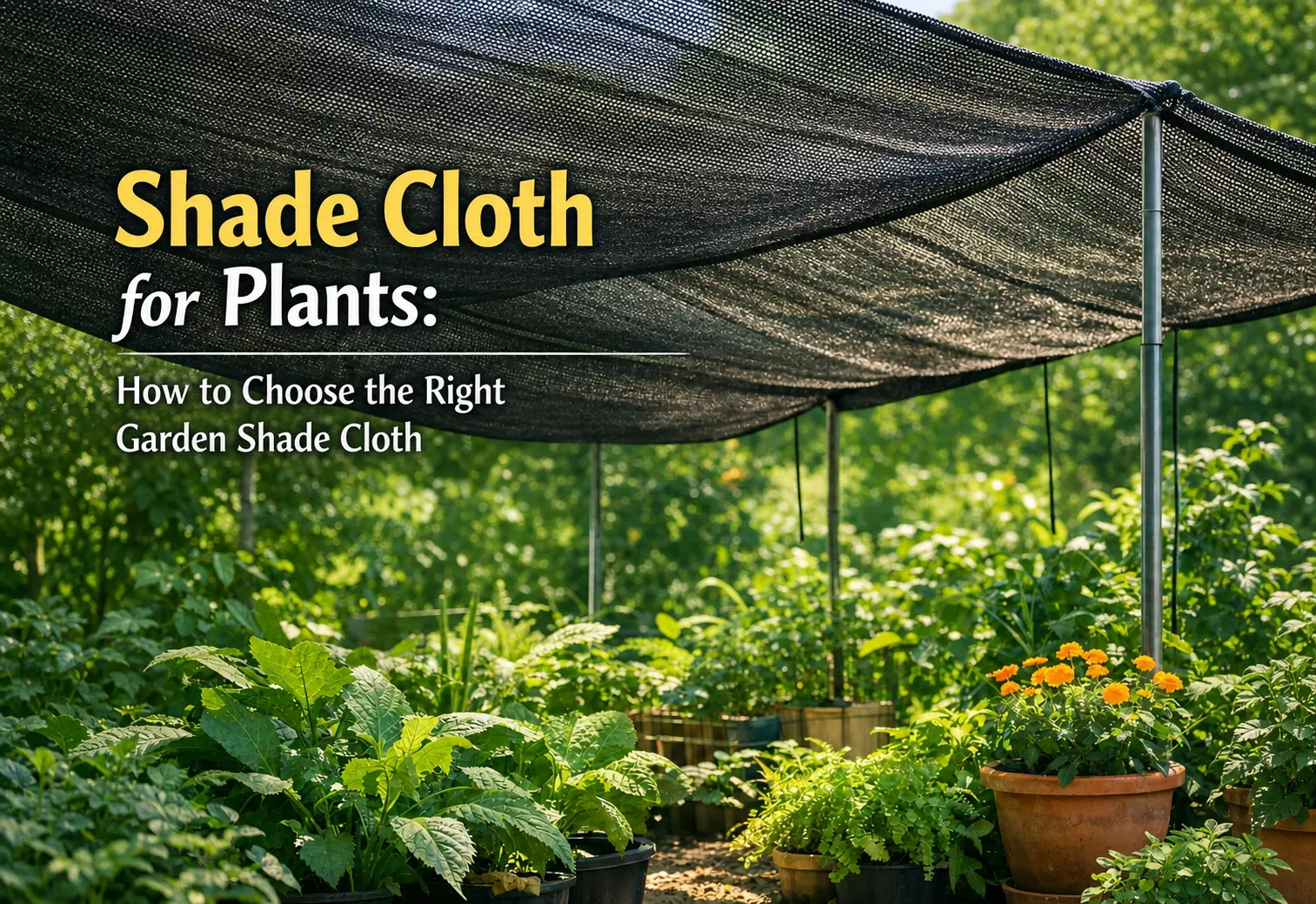
The most effective, chemical-free defense? Installing the right shade cloth for tomatoes and peppers. In this comprehensive guide, we will break down exactly what density and color you need, and how to install it to protect your crop without sacrificing your yield.
The Science of Heat Stress: Why Sun-Loving Plants Need Shade
It seems counterintuitive to shade plants that require 6 to 8 hours of sunlight to produce fruit. However, extreme heat triggers several physiological defense mechanisms in plants that halt production:
1. Sunscald (Sunburn for Plants)
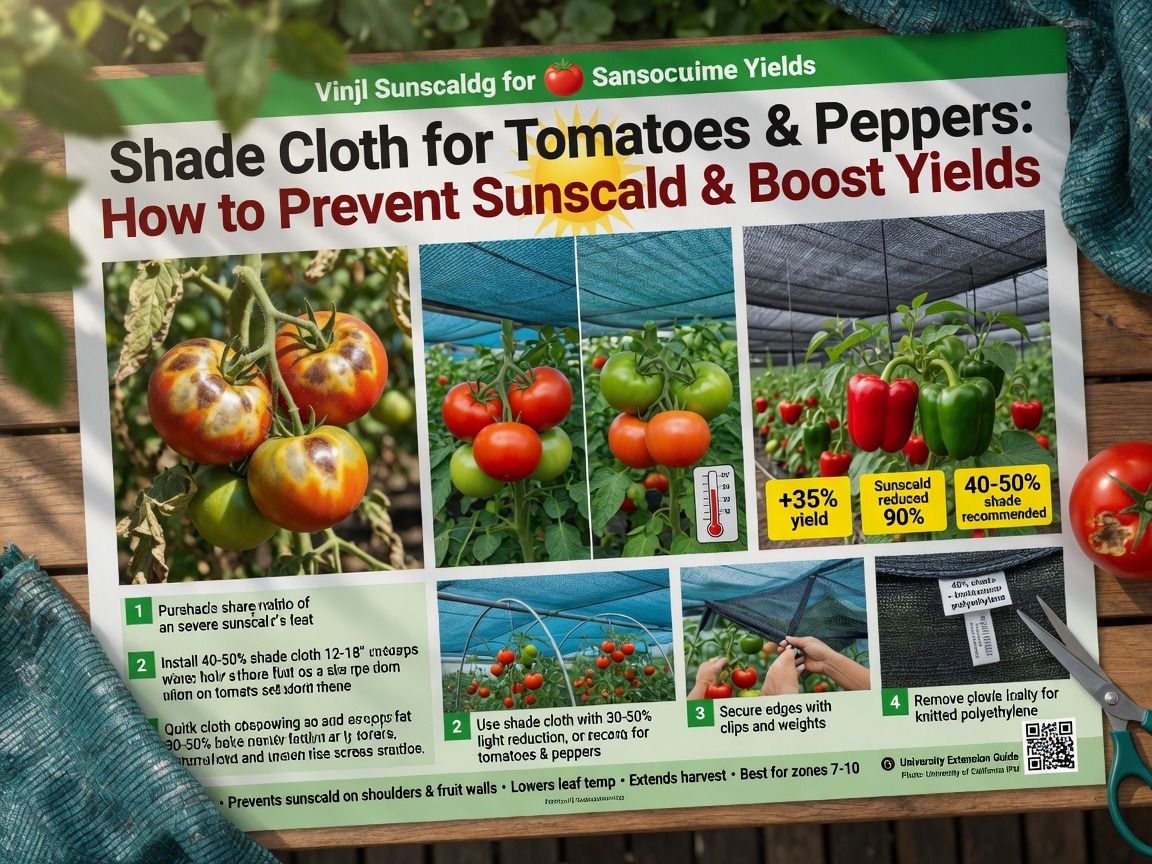
Just like human skin, the skin of a tomato or pepper can burn. Sunscald appears as pale, leathery, or sunken white/yellow patches on the side of the fruit facing the sun. This ruins the appearance, halts ripening in that spot, and creates an entry point for fungal rot and pests.
2. Blossom Drop
This is the silent yield-killer. When daytime temperatures exceed 90°F (32°C) or nighttime temperatures stay above 75°F (24°C), tomato and pepper pollen becomes sterile. The plant, realizing it cannot successfully reproduce in such heat, will simply drop its flowers before they can be pollinated. Zero flowers mean zero fruit.
3. Rapid Moisture Evaporation
Intense sun bakes the soil, causing rapid water loss. Even with daily watering, the roots may struggle to keep up with the transpiration rate of the leaves, leading to wilting and blossom end rot (a calcium deficiency often caused by uneven watering).
Using a shade cloth for peppers and tomatoes creates a stabilized microclimate that lowers the ambient temperature by 10°F to 15°F, keeping the plants in their optimal productive zone.
Choosing the Right Shade Cloth Density
Choosing the correct density (the percentage of sunlight blocked) is critical. If you block too much light, your plants will become "leggy" (tall and weak) and produce fewer fruits. If you block too little, the sunscald will continue.
The Sweet Spot: 30% to 40% Shade
For most temperate climates, a 30% or 40% shade cloth is perfect for fruiting vegetables. It filters out the harshest UV rays while still allowing 60% to 70% of sunlight to reach the leaves for robust photosynthesis.For Extreme Heat Zones (Desert Climates):
If you live in areas where summer temperatures regularly exceed 100°F (38°C), such as Arizona, Texas, or inland California, step up to a 50% shade cloth.Warning: Never use 70% or higher shade cloth for tomatoes and peppers. They simply will not get enough light energy to ripen the fruit. (If you are growing a mixed garden with leafy greens that need heavier shade, check out our [Ultimate Guide to Shade Cloth for Plants] to learn how to zone your garden properly.)
Color Matters: Black, White, or Aluminet?
Color plays a surprisingly large role in temperature management for your vegetable patch:
Black Shade Cloth: The standard, most cost-effective choice. It absorbs heat and provides a neutral, uniform light. A 30% black knitted cloth is highly effective for most home gardens.
White Shade Cloth: Instead of absorbing heat, white cloth reflects it. It keeps the canopy significantly cooler than black cloth and provides excellent light diffusion, which scatters light into the lower canopy of dense tomato plants. Ideal for extremely hot, sunny regions.
Aluminet (Reflective Shade): This metallic fabric is the ultimate heat shield. It reflects solar radiation away from the plants before it even hits the canopy. Many commercial greenhouse growers use Aluminet over their tomato crops during peak summer to prevent heat stress entirely.
Step-by-Step Installation Guide for Vegetable Gardens
Proper installation is just as important as choosing the right material. Here is how to set up a system that protects your plants while allowing for easy harvesting and pollination.
The "Afternoon Sun" Block (Vertical Installation)
The morning sun is gentle and necessary for drying dew off the leaves (which prevents fungal diseases like blight). The brutal, damaging rays occur between 2:00 PM and 6:00 PM.
Pro Tip: If you don't want to build a full roof structure, install your shade cloth vertically on the west or southwest side of your tomato cages or trellis. This acts as a targeted sunblock specifically against the harsh afternoon rays.
The Hoop Frame (Overhead Installation)
Avoid draping the cloth directly on the plants. As tomatoes grow, the friction will damage the leaves, and the weight of the cloth can snap heavy branches.
Use PVC pipes bent over your raised beds, or attach tall wooden stakes around the perimeter.
Drape the shade fabric over this frame.
Secure the cloth using bungee balls or snap clips. This allows you to easily roll up or remove the shade cloth on cloudy days.
Crucial Rule: Ensure Maximum Airflow and Pollinator Access
Tomatoes and peppers are highly susceptible to blight and mildew if air becomes stagnant. Furthermore, they need bees and wind for pollination.
Leave the sides open: Only cover the "roof" or the western side. Never box the plants in completely with shade cloth.
Keep it high: Ensure the roof of the shade cloth is at least 1 to 2 feet above the highest point of your plants to allow hot air to escape.
Advanced Tips: Combining Shade Cloth with Other Garden Netting
A smart gardener uses a layered approach to plant protection. While shade cloth handles the sun, you can integrate other netting to solve multiple problems at once:
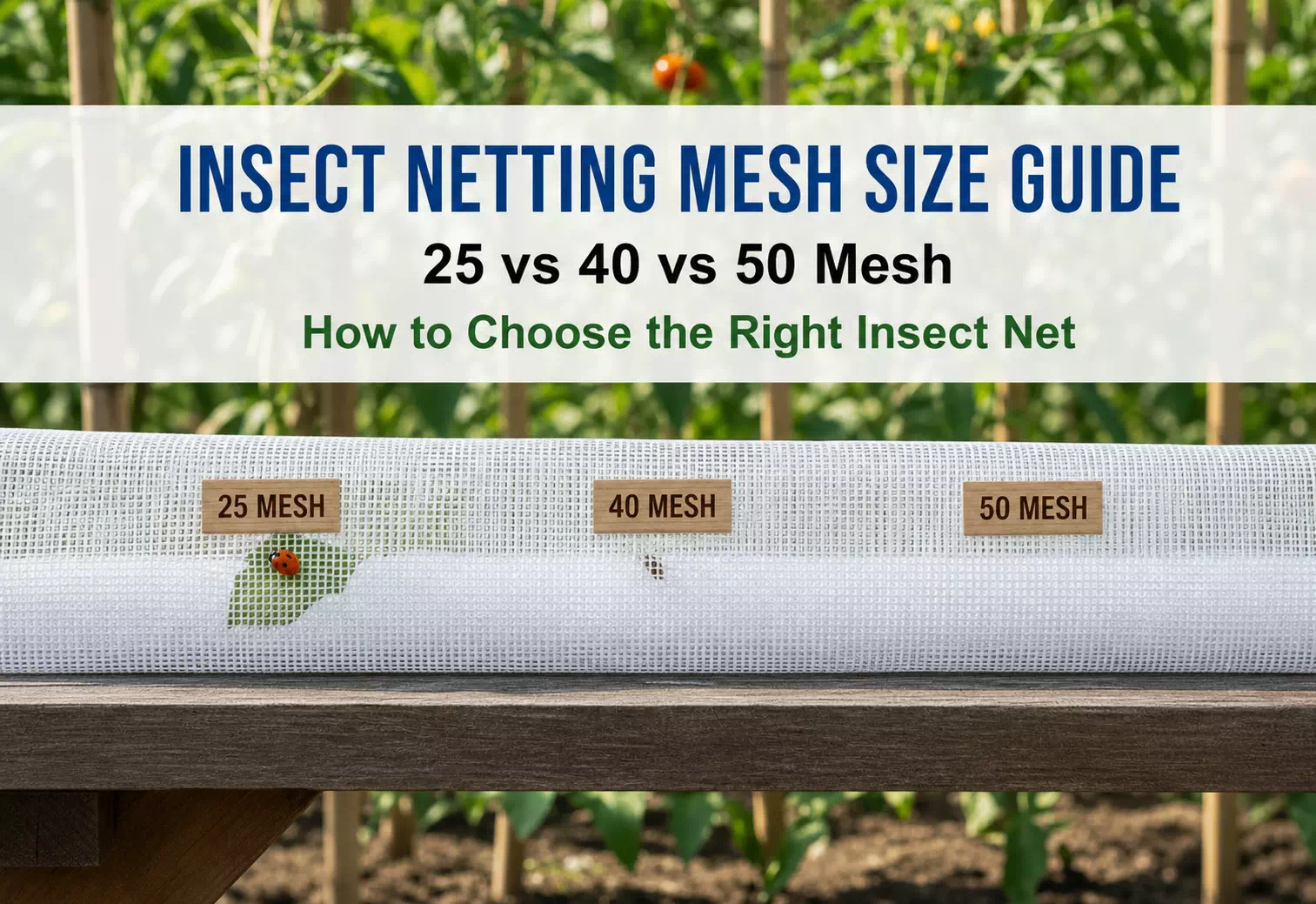
Adding Insect Netting: Hornworms and aphids love tomatoes. You can drape a fine insect net over your hoop frame underneath the shade cloth. The shade cloth protects the insect net from UV degradation, while the insect net keeps pests out. Just remember to remove the insect net once the plants start flowering so bees can pollinate!
Adding Bird Netting: If birds are pecking at your ripening tomatoes, wrap the lower half of your frame with bird netting. This keeps the fruit safe while the shade cloth above keeps it from getting sunburned.
Frequently Asked Questions (FAQ)
Should I remove the shade cloth when it rains?
No, a 30% to 50% knitted shade cloth is highly permeable. It will allow the majority of rain to pass through and water your plants, while also breaking the impact of heavy downpours that could bruise the fruit.
Can I use shade cloth to protect tomato seedlings?
Yes! Newly transplanted seedlings are very vulnerable to shock. Using a 50% shade cloth for the first 5 to 7 days after transplanting helps them establish roots without the stress of full sun. Remove it gradually as they harden off.
Will shade cloth stop my tomatoes from ripening?
No, as long as you use the correct density (30% to 50%). Tomatoes actually ripen best at temperatures between 70°F and 75°F. By preventing the plant from overheating, shade cloth actually promotes even, healthy ripening.
Final Thoughts
Don't let the peak of summer ruin months of hard work. By investing in a 30% to 50% shade cloth for tomatoes and peppers, you can prevent sunscald, stop blossom drop, and extend your growing season well into the late summer.
Assess your local climate, build a simple frame that allows for airflow, and watch your yields increase.