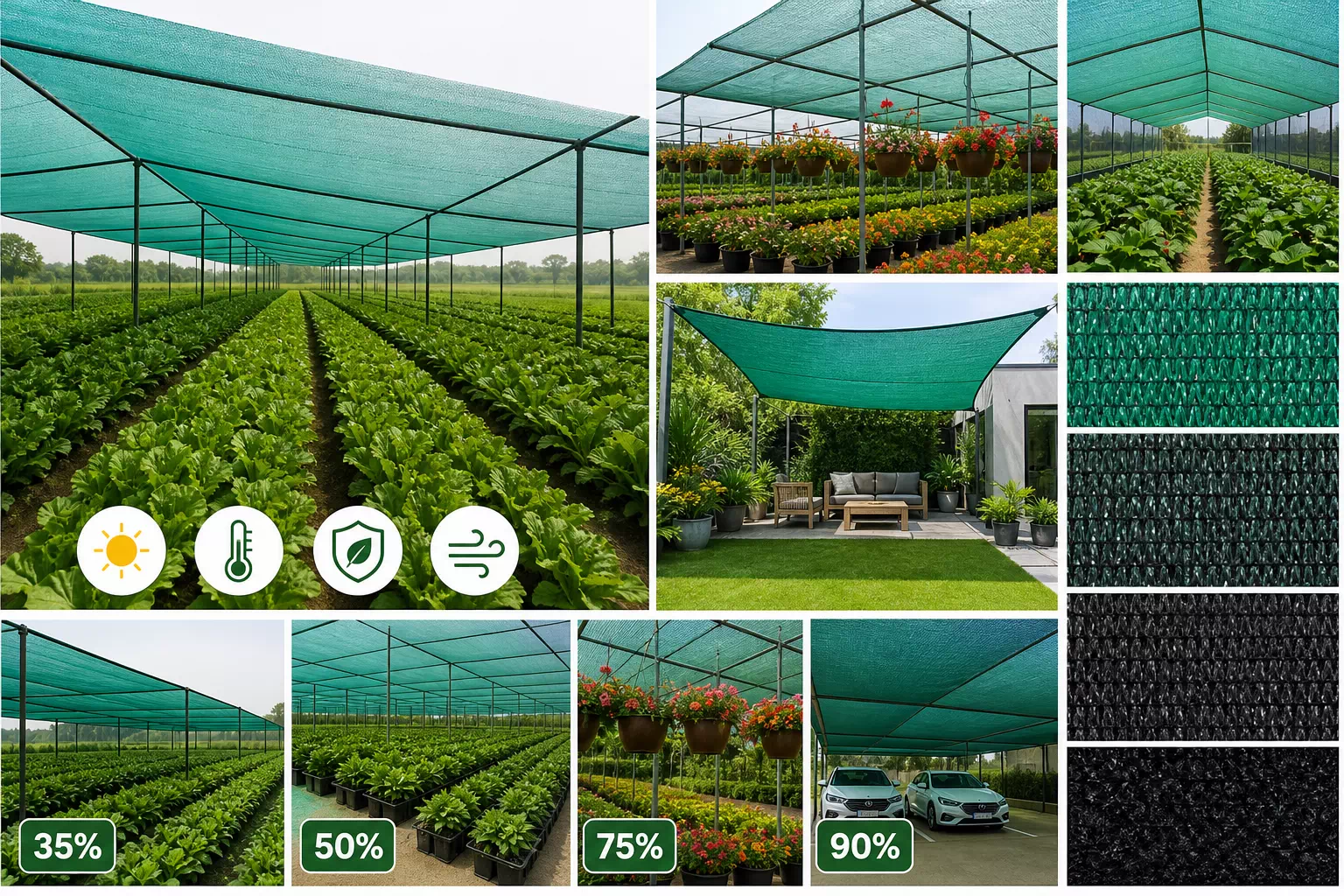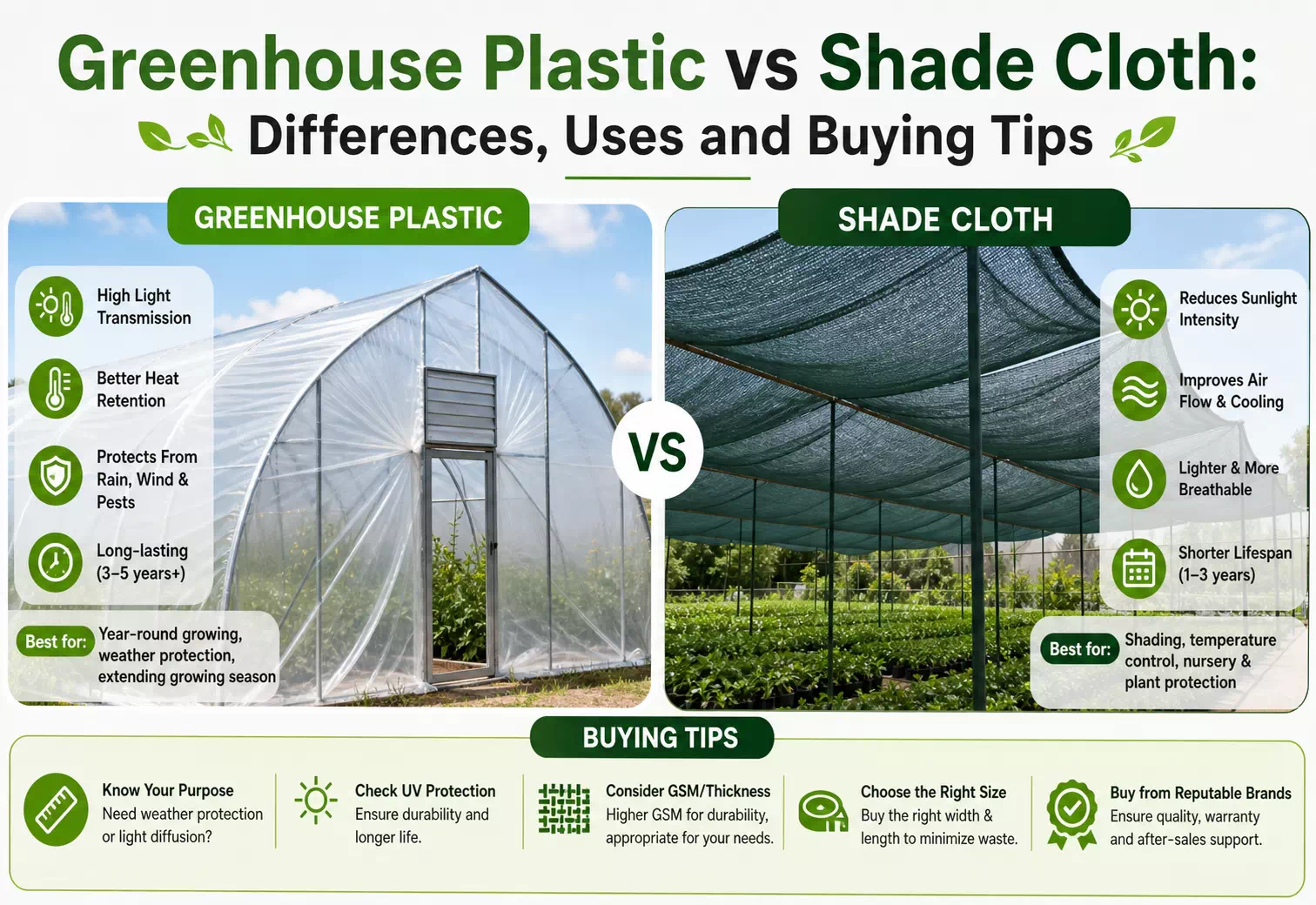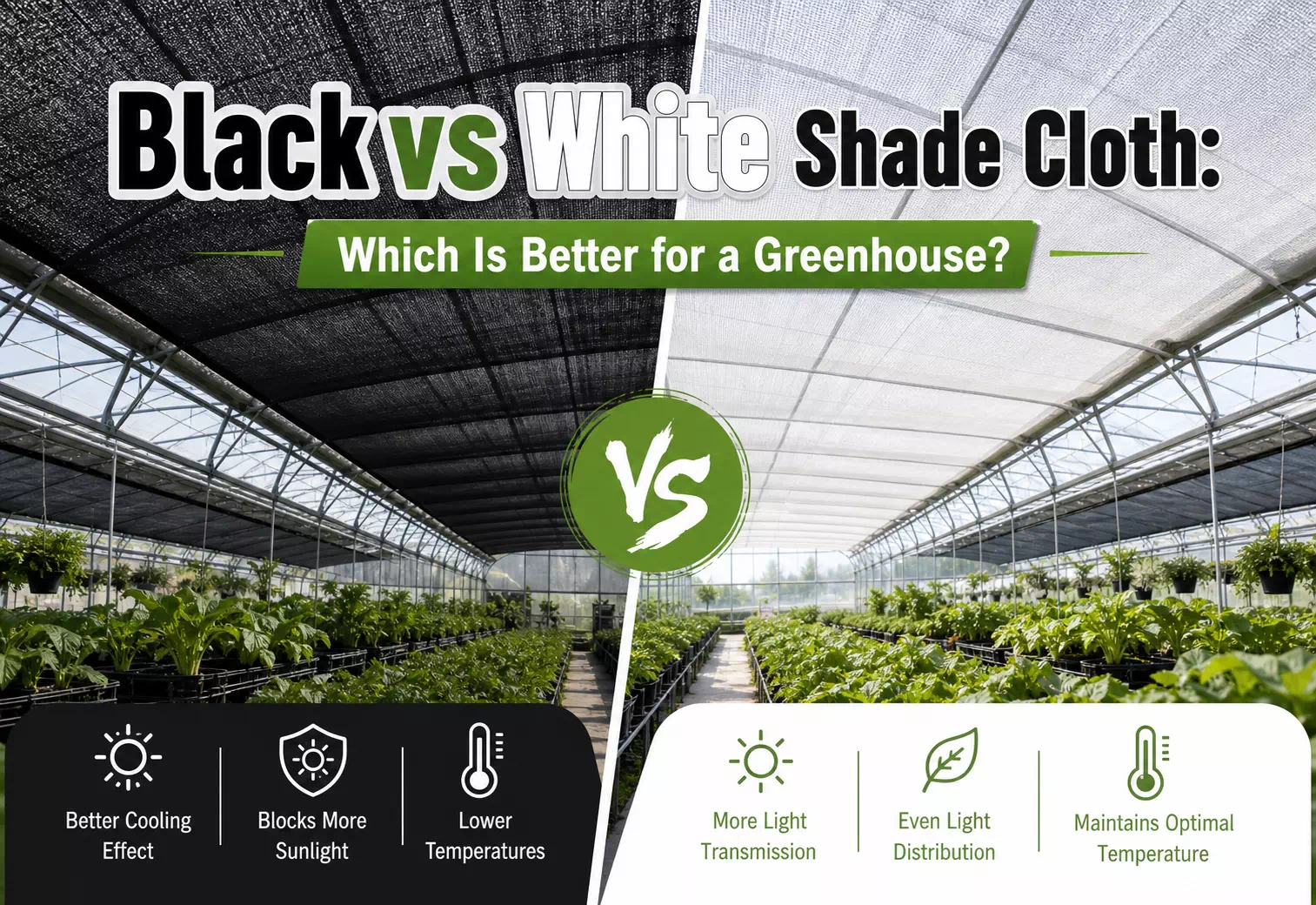
Choosing between black and white shade cloth may seem like a simple color decision, but the right choice depends on much more than appearance. For greenhouse growers, nurseries, farms and commercial buyers, factors such as shade percentage, material, weave, ventilation, installation position, crop requirements and local climate can have a greater impact on the final result.
Black shade cloth is widely used for general shading and agricultural applications, while white shade cloth is often considered when a lighter visual environment or a specific light-management requirement is preferred. However, neither color is automatically better for every greenhouse.
The better approach is to choose the application first, determine the required shade percentage, and then compare black and white products with similar specifications.
Black vs White Shade Cloth: Why Color Is Only One Factor
The color of a shade cloth can affect the appearance of a greenhouse and influence the way light is experienced inside the growing area. But color alone does not describe the actual performance of the product.
Two shade cloths may look completely different but provide similar shading. On the other hand, two products with the same color can have very different shade percentages, weights, constructions and UV treatments.
Before comparing black vs white shade cloth, check the following specifications:
Shade percentage
Material and UV treatment
Flat-wire or round-wire construction
Weight or grammage
Internal or external installation
Greenhouse ventilation
Crop type and growth stage
Season and local climate
Available width and length
Edge finishing and fastening requirements
This is especially important when purchasing shade cloth in bulk. Comparing products with different specifications can produce a misleading result because the observed difference may come from the shade level or construction rather than the color itself.
Black Shade Cloth: Advantages and Common Applications
Black shade cloth is a common option for agricultural, greenhouse, garden and selected construction applications. Its darker appearance creates a stronger visual shading effect and can be a practical choice for projects where general sunlight protection is the main objective.
When Is Black Shade Cloth a Good Choice?
Black shade cloth may be suitable when a project requires:
General protection from direct sunlight
A darker and more sheltered growing environment
A commonly used agricultural shade color
Fixed or seasonal greenhouse coverage
A specific shade percentage already defined by the project
A product that can match an existing agricultural installation
However, choosing black does not automatically mean choosing a high-shade product. A black cloth with a lower shade percentage can allow more light through than a white product manufactured with a higher shade percentage.
Installation also matters. A black shade cloth installed above a well-ventilated greenhouse can perform differently from the same material installed close to a poorly ventilated roof. Wind exposure, tension, fastening and outdoor conditions can also influence long-term use.
When evaluating black shade cloth for a commercial project, ask the supplier for the actual shade percentage, material specification, UV treatment, construction type, width, edge finishing and available samples.
White Shade Cloth: Advantages and Common Applications
White shade cloth may be considered when a project requires a lighter visual environment or when the buyer wants to compare different light-management options.
When Is White Shade Cloth a Good Choice?
White shade cloth may be suitable when the project requires:
A lighter-looking greenhouse or covered area
A project-specific color choice
Comparison of different light environments
A color that matches an existing greenhouse structure
A specific shade percentage available in white
Greenhouse, garden or agricultural coverage
One common mistake is assuming that white shade cloth is always cooler than black shade cloth. Color alone cannot guarantee a lower temperature or better crop performance. The actual result depends on the complete product specification, shade percentage, ventilation, installation position, greenhouse design and weather conditions.
White fabric can also show dust and dirt more easily in some outdoor environments. For long-term agricultural or greenhouse projects, buyers should consider cleaning, handling and maintenance as part of the selection process.
As with black shade cloth, request the actual material, shade percentage, construction, UV-treatment information, width and sample before placing a large order.
Black vs White Shade Cloth: Side-by-Side Comparison
The table below provides a practical starting point for comparing black and white greenhouse shade cloth.
| Comparison Factor | Black Shade Cloth | White Shade Cloth |
|---|---|---|
| Visual appearance | Darker, stronger shading impression | Lighter and brighter appearance |
| Typical selection reason | General shading and established agricultural applications | Light environment and project-specific requirements |
| Temperature performance | Depends on shade percentage, material, airflow and installation | Depends on shade percentage, material, airflow and installation |
| Greenhouse suitability | Suitable for many greenhouse and agricultural projects | Suitable for selected greenhouse and agricultural projects |
| Garden applications | Commonly used for general shade and privacy | Useful when a lighter appearance is preferred |
| Key specifications to check | Shade percentage, UV treatment, construction and ventilation | Shade percentage, UV treatment, construction and installation |
| Commercial purchasing priority | Specification consistency, width, packaging and supply | Specification consistency, width, packaging and supply |
| Recommended buying method | Compare representative samples | Compare representative samples |
The key point is simple: color should be compared only after the basic specifications are comparable.
Which Shade Cloth Is Better for Different Greenhouse Conditions?
The best shade cloth depends on how the greenhouse is used. A product that works well for a nursery may not be the right choice for a commercial vegetable greenhouse or a garden patio.
1. Hot Greenhouses With Limited Airflow
If a greenhouse already has poor ventilation, changing from black to white shade cloth should not be the first solution.
Start by checking roof vents, side vents, fans and the path through which hot air leaves the structure. Trapped hot air cannot be solved simply by changing the color of the shade cloth.
Installation position and shade percentage may be more important than color in this situation. Before making a decision, review the complete greenhouse structure and ventilation plan.
2. Seasonal Vegetable Production
For vegetables grown across different seasons, flexibility can be more important than color. A fixed shade cloth that works during the hottest part of summer may reduce useful light during cooler or cloudy periods.
Consider whether the shade system should be removable, retractable or divided into roof and side sections. This allows growers to adjust coverage according to crop development and weather conditions.
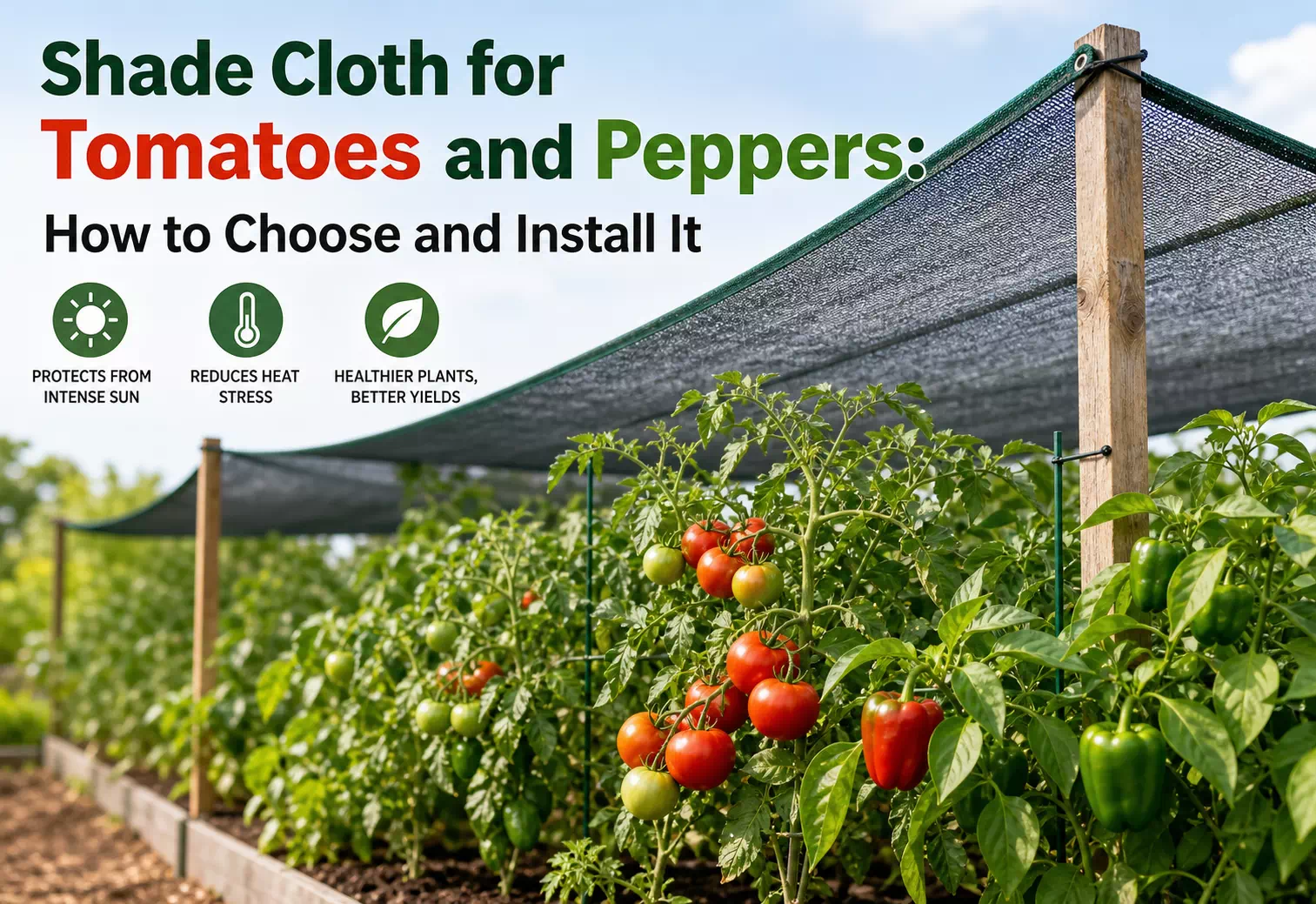
For crops such as tomatoes and peppers, shade cloth selection should be considered together with crop stage, local climate, ventilation and direct sunlight exposure.
3. Nurseries and Young Plants
Young plants can have changing light requirements as they develop. For nursery applications, the ability to adjust or remove the shade cloth may be more important than choosing a particular color.
Buyers should consider how the cloth will be installed, moved, divided, fixed and stored. Width and edge treatment should also match the nursery support structure.
4. Commercial Greenhouse Projects
For commercial greenhouse projects, buyers should evaluate more than color consistency.
Important purchasing details include:
Shade percentage
Material
Width and length
Construction type
UV treatment
Edge finishing
Packaging
Quantity and MOQ
Delivery schedule
OEM or private-label requirements
If different crops or greenhouse zones are included in the same project, one shade level may not be suitable for every area. Dividing the greenhouse into zones and testing representative samples can provide a more useful basis for purchasing decisions.
5. Garden and Patio Applications
For gardens, patios and residential outdoor spaces, appearance and privacy may be more important than they are in commercial agriculture.
Black shade cloth can create a stronger sheltered appearance, while white can provide a lighter visual effect. In both cases, buyers should consider the coverage area, fixing method, wind exposure, seasonal use and maintenance requirements.
Why Shade Percentage Matters More Than Color
When comparing black vs white shade cloth, shade percentage should usually be one of the first specifications to confirm.
Imagine comparing a black shade cloth with a relatively low shade percentage against a white cloth with a much higher shade percentage. If the greenhouse shows a noticeable difference in light or temperature, it would be difficult to determine whether the result came from the color or the different shade level.
For this reason, buyers should first identify the approximate shade percentage required for the crop and growing environment. Once the required range has been established, black and white products can be compared using similar material, construction and coverage.
Material construction should also be considered. Flat-wire and round-wire shade cloth products can have different structures and available specifications, so color should never be the only comparison point.
Internal vs External Shade Cloth Installation
Installation position can change how shade cloth interacts with the greenhouse. Therefore, the installation method should be considered before finalizing the color.
| Installation Type | Important Factors |
|---|---|
| Internal installation | Available space, fixing points, vents, fans, maintenance and service access |
| External installation | Wind exposure, edge fastening, tension, drainage, structure and access |
| Fixed installation | Long-term stability, cleaning and seasonal suitability |
| Removable or retractable installation | Adjustment, storage, handling and installation time |
Internal installation may be easier to access or adjust in some greenhouse structures. External installation may be considered when the project needs shading above the greenhouse covering.
Neither installation method is automatically better. The greenhouse structure, local weather, maintenance plan and required level of control should determine the final choice.
How to Compare Black and White Shade Cloth Samples
For commercial buyers, requesting samples before a bulk order can reduce uncertainty. A sample test cannot reproduce every possible weather condition, but it can help buyers compare appearance, handling, installation and basic light conditions.
For a more useful comparison, follow a consistent process:
Test black and white samples in the same greenhouse or comparable locations.
Keep the shade percentage as similar as possible.
Use comparable material and construction.
Observe the samples during the same period of the day.
Pay attention to direct sunlight conditions.
Check the installation and fixing method.
Observe airflow and the practical handling of the fabric.
Record the weather, date, installation position and product specifications.
Compare the observations with the crop and project requirements.
A short sample test should not be treated as a laboratory performance test. Its main purpose is to identify practical differences before committing to a large production order.
What Should You Ask a Shade Cloth Manufacturer?
Whether you are buying for a greenhouse, nursery, farm or distribution business, asking the right questions can make product comparison much easier.
What material is the shade cloth made from?
What is the actual shade percentage?
Is UV treatment available?
Can the UV treatment or product specification be documented?
Is the product flat-wire or round-wire?
What widths and lengths are available?
How are the edges finished?
What are the MOQ and packaging options?
Can you provide black and white samples with comparable specifications?
Are custom widths available?
Are OEM labels or private-label packaging available?
What information is required for a quotation?
These questions move the purchasing discussion away from simply asking for a color and toward a complete product specification.
What Information Should You Include in a Shade Cloth Inquiry?
A manufacturer can provide a more accurate recommendation and quotation when the project information is clear.
| Information | Example |
|---|---|
| Application | Greenhouse, nursery, garden or agricultural project |
| Crop or use | Tomatoes, peppers, seedlings or general shading |
| Location | Country and local climate |
| Coverage area | Roof, side walls or total dimensions |
| Installation | Internal, external, fixed, removable or retractable |
| Shade percentage | Preferred shade level or request for recommendation |
| Color | Black, white, green or other available options |
| Construction | Flat-wire or round-wire, if required |
| Quantity | Estimated area or number of rolls |
| Packaging | Roll, carton, bulk or OEM packaging |
| Destination | Country or port of delivery |
| Target delivery date | Required shipment schedule |
Common Mistakes When Choosing Black or White Shade Cloth
Choosing Color Before Defining the Application
Color is easy to specify, but it does not tell the manufacturer how much shade is required or how the cloth will be installed. Start with the greenhouse, crop and climate.
Assuming White Shade Cloth Is Always Cooler
White can provide a lighter appearance, but temperature performance depends on multiple factors. Shade percentage, material, airflow, installation position, greenhouse structure and weather should be considered together.
Assuming Black Shade Cloth Is Always Too Hot
Black may not be suitable for every situation, but it should not be rejected simply because of its color. Compare the actual shade percentage, construction and installation conditions before making a decision.
Comparing Products With Different Shade Percentages
If a black product and a white product have different shade levels, the comparison is not reliable. Ask the supplier for samples with comparable specifications.
Ignoring the Greenhouse Structure
Even a suitable shade cloth cannot compensate for blocked ventilation, weak support, poor fastening or inadequate tension. The installation system should be reviewed together with the fabric.
Choosing From a Product Image Alone
Online images can help buyers understand color and texture, but they cannot confirm shade percentage, UV treatment, strength, exact dimensions or long-term outdoor performance.
For an important commercial project, request a specification sheet and representative samples before placing a large order.
Frequently Asked Questions About Black vs White Shade Cloth
Does white shade cloth keep a greenhouse cooler than black shade cloth?
Not automatically. Temperature performance depends on shade percentage, material, installation position, ventilation, greenhouse design and weather conditions. A fair comparison requires black and white products with comparable specifications.
Is black shade cloth better for plants?
Black shade cloth can be suitable for many agricultural and greenhouse applications, but there is no universal answer. Crop type, climate, required shade level, ventilation and installation should all be considered.
Which shade cloth color is best for tomatoes?
Black, white or another color may be suitable depending on the greenhouse environment. Start by determining the required shade percentage and considering the crop stage, local climate and ventilation. Then compare samples with similar specifications.
Can I change the color without changing the shade percentage?
Different colors may be available at similar shade levels, depending on the manufacturer's product range. Always confirm the actual shade percentage, material and construction for each color rather than assuming they are identical.
Does color affect shade cloth service life?
Service life depends on factors such as material, UV treatment, outdoor exposure, wind, tension, installation and maintenance. Color alone should not be used to estimate service life. Ask the manufacturer for current technical information.
Should I request samples before placing a bulk order?
For commercial projects, samples are useful for comparing appearance, handling, fixing and basic light conditions. They cannot replace formal laboratory testing, but they can help identify practical issues before a large production order.
Final Recommendation: Black or White Shade Cloth?
So, which is better: black or white shade cloth?
The most practical answer is that neither color is universally better. The right choice depends on the greenhouse, crop, climate, shade requirement and installation system.
A simple selection process is:
Choose the application first.
Determine the required shade percentage.
Check material and construction.
Review ventilation and installation position.
Compare black and white products with similar specifications.
Request samples before a large commercial order.
If the greenhouse is already experiencing excessive heat, inspect ventilation before simply changing the shade cloth color. If the project is seasonal, consider a removable or retractable system. If the order is large, compare representative black and white samples under similar conditions.
Need Black or White Shade Cloth for Your Greenhouse?
Dawei Shade Net Co., Ltd. supplies shade net solutions for agricultural, greenhouse, garden, construction and industrial applications.
Available product options include black, white, green and other shade net colors, with different constructions such as flat-wire and round-wire shade cloth. OEM/ODM customization, custom specifications and packaging options can also be discussed according to project requirements.
For current product specifications, availability and commercial quotations, provide your application, greenhouse dimensions, required shade percentage, preferred color, quantity and destination country.
Request Black and White Shade Cloth Options
Contact Dawei with your project requirements to compare suitable shade cloth specifications and sample options before placing a bulk order.
About Dawei Shade Net Co., Ltd.
Dawei Shade Net Co., Ltd. is a China-based manufacturer supplying shade nets and agricultural protection products for international customers.
Its product range includes black, white, green and other shade net options, together with flat-wire and round-wire constructions. The company also provides solutions for agricultural nets, insect-proof nets, hail protection nets, dust-proof nets, safety nets and greenhouse covering applications.
For wholesale orders, OEM/ODM projects, custom specifications, samples and packaging requirements, contact the Dawei team with your project details.
Editor's Note
Shade cloth performance can vary according to product specifications, installation method and environmental conditions. Before ordering, buyers should confirm shade percentage, width, UV treatment, construction, service-life information and application recommendations with the manufacturer's current technical documentation.