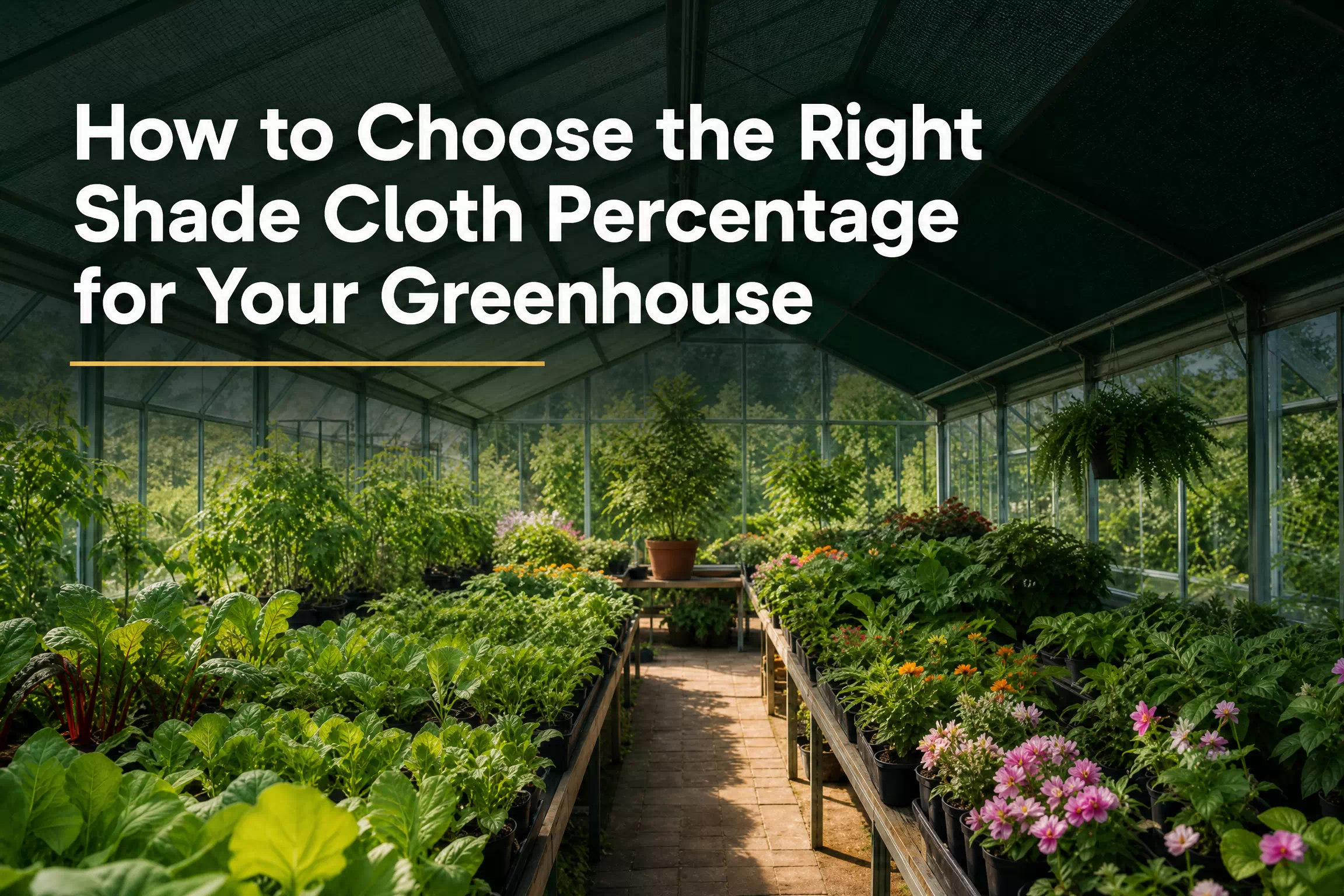
Choosing a shade cloth for a greenhouse usually starts with one question: what percentage should I buy?
That question is useful, but it is not enough to choose the right product. A shade cloth that works well in a hot, bright region may block too much light in a cloudy climate. A cloth that protects seedlings in midsummer may be unsuitable for fruiting crops later in the season. Even two greenhouses growing the same crop may need different solutions if their ventilation, orientation and installation methods are different.The practical approach is to treat shade percentage as a starting point, not a final answer. Begin with the crop and local growing conditions. Then check the greenhouse, the season and the way the cloth will be installed.Short answer: Choose shade percentage according to the crop’s light requirements, local sunlight, season, greenhouse position and airflow. Higher shading is not automatically better. If possible, compare samples under representative conditions before placing a large order.
What Shade Cloth Percentage Actually Tells You
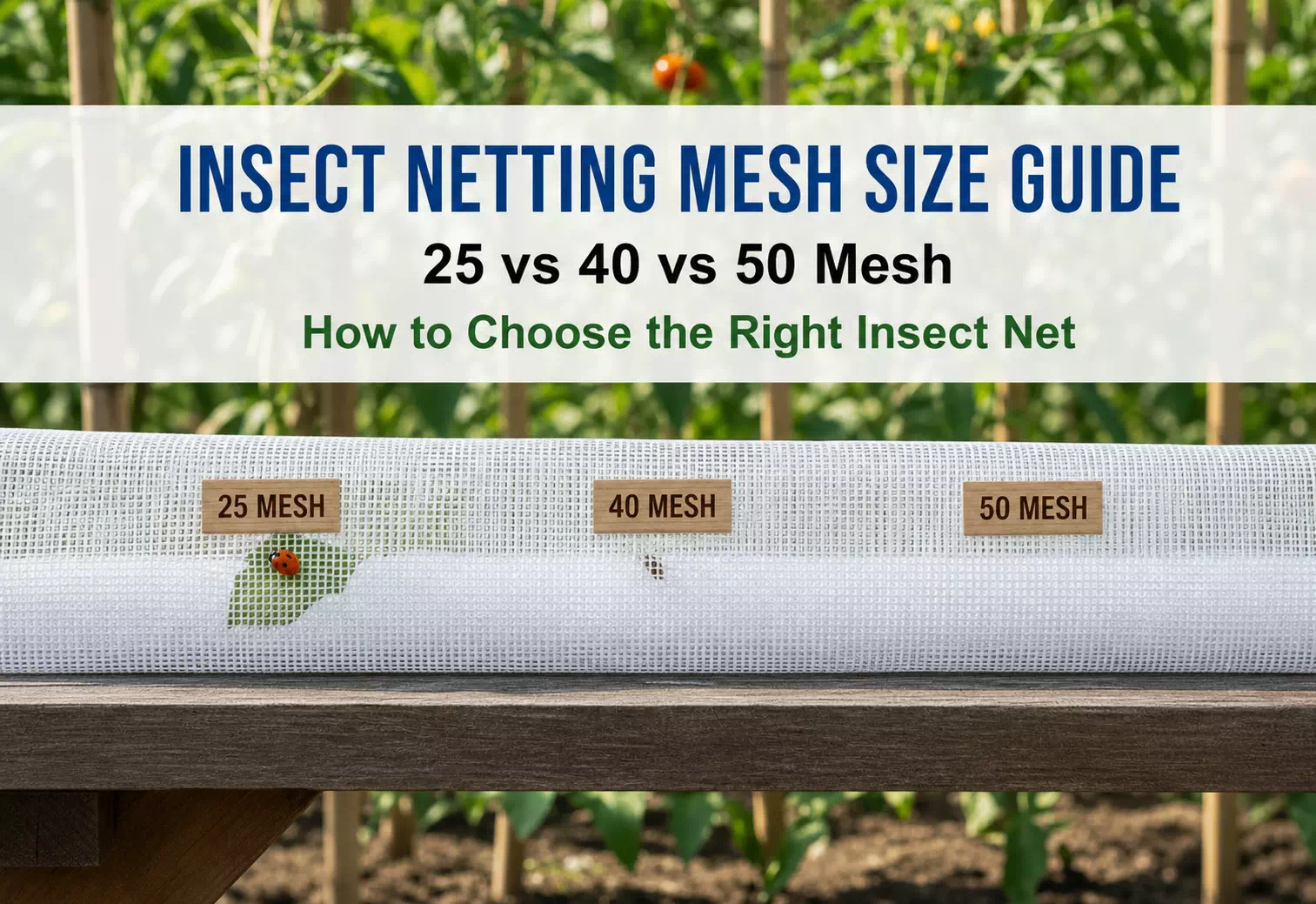
Shade percentage describes the approximate amount of sunlight or solar radiation blocked by a shade cloth. A higher percentage generally means less direct light passes through; a lower percentage allows more light to reach the greenhouse.It does not mean the greenhouse temperature will fall by the same percentage. A 60% shade cloth does not automatically reduce the temperature by 60%. Temperature inside the greenhouse is also affected by the cloth’s material, color, weave, installation position, ventilation, humidity, greenhouse design and weather.Shade percentage is also different from mesh size. Mesh size describes the openings or structure of the net. Shade percentage describes its light-blocking performance. These specifications should not be used interchangeably, especially when comparing shade netting with insect netting.
Start With the Crop, Not the Product Catalogue
The first thing to identify is the crop, variety and growth stage. Seedlings, leafy vegetables, flowering plants and fruiting crops may respond differently to the same level of shade. A cloth chosen for one crop or production stage may not be appropriate for another.This is why copying another grower’s specification can be misleading. The same shade percentage may work in one region and create a light shortage in another. Before ordering, ask:•Does the crop tolerate full sun, or is it sensitive to heat and intense radiation?•Is the greenhouse used for seedlings, vegetative growth, flowering or fruiting?•Are all beds growing the same crop?•Does the crop need the same level of protection throughout the season?For a commercial greenhouse, production records are often more useful than a generic online recommendation. If there is no previous record, use local horticultural advice and a sample test to establish a sensible starting point.
Climate Matters More Than a Generic Percentage
A greenhouse in a hot, sunny region may need stronger protection during peak summer than one in a mild or frequently cloudy region. The important question is not simply whether the greenhouse is “hot”, but when, where and why it becomes hot.Look at the site during the hottest part of the day. Note the direction of direct sunlight, the amount of afternoon exposure and whether hot air can escape. Also consider whether the local climate is dry, humid, windy or rainy, because these conditions affect both crop response and the way the cloth should be installed.A low-light greenhouse may suffer if the shade cloth is too dense. A greenhouse with strong afternoon sun may need additional shading, but the solution may also involve better ventilation, irrigation or air movement. If the problem is trapped hot air, adding a denser cloth alone may only hide the real issue.
The Greenhouse Structure Changes the Decision
The same shade cloth can behave differently depending on where it is installed. Roof coverage, side coverage, internal curtains and external systems each have different effects on light and heat.Before choosing a product, check the following:
Greenhouse factor | Why it matters |
Roof orientation | Determines how much direct sunlight reaches the crop |
Afternoon exposure | May create a concentrated heat problem on one side of the greenhouse |
Internal or external installation | Changes when the sunlight is intercepted and how the cloth is maintained |
Roof and side vents | Affect whether hot and humid air can escape |
Fans and air circulation | Influence the result of a denser shade cloth |
Support structure | Determines how the material can be fixed and tensioned |
Doors and service areas | Must remain accessible after installation |
Do not plan coverage from floor area alone. A curved roof, sloping roof or combined roof-and-side system can require much more material than a simple rectangular calculation suggests.
How Ventilation Fits Into the Shade Decision
Shade cloth controls incoming sunlight. It does not remove hot or humid air from the greenhouse.Before increasing the shade percentage, inspect the side vents, roof vents, exhaust fans and circulation fans. Check whether the cloth will cover or restrict any opening. Also consider the distance between the cloth and the greenhouse covering, as well as the route hot air takes to leave the structure.A dense cloth over a poorly ventilated greenhouse may create a different environment from the same cloth over a structure with strong air movement. The right choice is therefore not “more shade whenever the greenhouse is hot”. It is a balance between the amount of light entering and the greenhouse’s ability to release heat.
A Practical Starting Framework
The table below is intended to help organize the decision. It is not a universal prescription for every crop or country.
Growing condition | Practical starting direction | What to check after installation |
Young seedlings under strong sunlight | Consider moderate to higher shading | Seedling response, humidity and airflow |
Heat-sensitive crops in a hot climate | Consider moderate shading with effective ventilation | Leaf temperature, crop growth and ventilation |
Full-sun crops in a mild climate | A lower shade level may be sufficient | Light levels during the hottest hours |
Low-light or frequently cloudy region | Avoid excessive shading | Daily light and crop development |
Seasonal greenhouse production | Consider removable or adjustable shading | Ease of seasonal adjustment |
Greenhouse with limited airflow | Improve ventilation before increasing shade | Vents, fans, humidity and air movement |
Commercial greenhouse with several crops | Consider separate zones or shade sections | Crop groups and production schedule |
The important word in this table is starting. Use the crop, climate and greenhouse data to narrow the choice, then confirm the result through observation or sample testing.
Shade Cloth by Greenhouse Application
Seedling houses
Seedlings are often more vulnerable to intense sunlight and high temperatures than established plants. The challenge is to reduce stress without creating a stagnant, overly humid environment.If the same structure is used for different seedling stages, a removable, adjustable or sectional system may be more practical than a permanent full-coverage installation. The cloth should also be easy to inspect and maintain.
Vegetable greenhouses
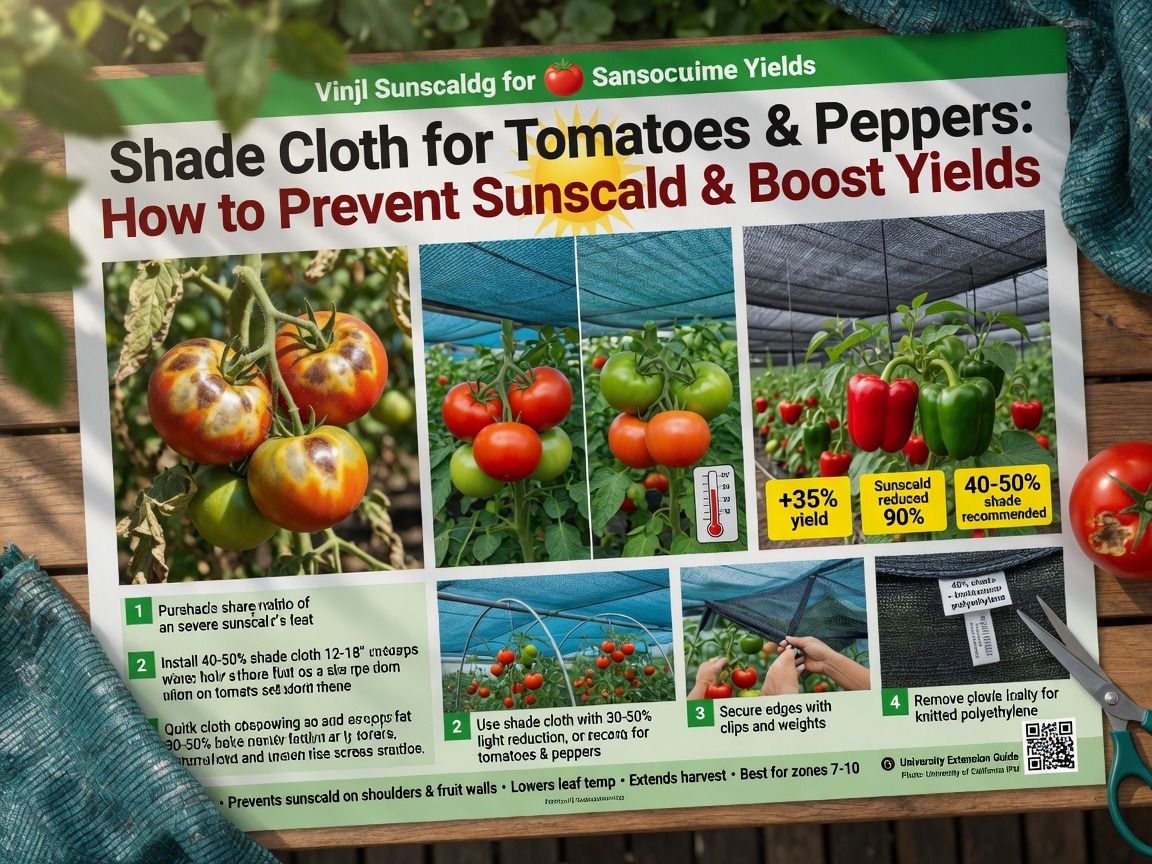
Vegetable production requires a workable balance between light, heat and airflow. The right specification depends on the crop, variety, planting season and local climate.For crops such as tomatoes and peppers, the conditions during flowering and fruit development deserve particular attention. Shade cloth should be considered together with ventilation, irrigation and crop monitoring, not as a replacement for them. See the related guide: Shade Cloth for Tomatoes and Peppers.
Flower and ornamental production
Ornamental plants may have specific requirements for light, plant shape, leaf quality and flower appearance. A recommendation made for vegetables may not transfer directly to an ornamental crop.For commercial production, test the proposed cloth in a representative section before committing to a large quantity. Record the crop, weather and installation conditions so the result can be compared properly.
Nurseries
Nurseries commonly handle plants at different ages and may need to move or divide the shade system. In this case, width, length, edge treatment and fastening method matter almost as much as shade percentage.A cloth that is technically suitable but difficult to move or fix can increase labor and maintenance costs. Discuss handling requirements before finalizing the order.
Large agricultural projects
A large project should be specified as a complete system. Prepare the greenhouse dimensions, coverage area, installation position, shade percentage, color, quantity, packaging requirements, destination country and target delivery date before requesting a quotation.A manufacturer may also need to confirm the available width, roll length, edge reinforcement, packaging and production schedule. The clearer the information at the beginning, the less likely the project is to change after production starts.
Shade Percentage Is Only One Product Specification
Two shade cloths with the same nominal shade percentage may not perform identically. Material, color, weight, construction and installation all influence the result.Before comparing quotations, ask for the following information:
Specification | Why it matters |
Material | Helps you compare durability, handling and outdoor use |
UV treatment | Important for outdoor exposure; request supporting documentation where available |
Shade percentage | Indicates the intended level of light blocking |
Color | May influence the light environment and visual appearance |
Flat-wire or round-wire construction | Affects structure, feel, appearance and available applications |
Width and length | Must match the greenhouse and installation plan |
Edge treatment | Affects fastening and handling |
Weight or grammage | Helps compare products when the supplier provides consistent data |
Packaging | Important for storage, shipping and wholesale handling |
Dawei Shade Net Co., Ltd. lists black, green, white, beige and other shade net options, including flat-wire and round-wire products. The company also presents agricultural, construction and industrial netting solutions and OEM/ODM customization. Confirm current specifications, available widths and sample options with the Dawei team before ordering.For a more detailed color comparison, see Black vs White Shade Cloth: Which One Is Better for Your Application?.
Measure the Greenhouse Before You Ask for a Quote
A supplier can make a more useful recommendation when the dimensions and installation plan are clear. Record:1.The length and width of every roof section.2.The height and length of the side sections.3.The roof shape, including curves and slopes.4.The position of doors, vents, fans and service openings.5.The location of support wires, rails, pipes or other fixing points.6.The overlap required between sections.7.The edge allowance required for fastening.8.Whether the system will be fixed, removable, retractable or seasonal.For planning purposes:Required material area = measured coverage area + installation allowance + overlap allowanceThe allowance depends on the greenhouse structure and fastening method. Do not calculate the order only from the greenhouse floor area, particularly when the roof is curved or when both roof and sides will be covered.
Six Mistakes That Cause Problems Later
Choosing the highest shade percentage by default
More shade is not automatically better. Excessive shading can reduce the light available to crops, especially during cloudy periods or in low-light regions.
Copying one online recommendation for every climate
A general guide is a starting point, not a substitute for local conditions. Sunlight, temperature, humidity, wind, greenhouse design and crop stage all matter.
Treating ventilation as an afterthought
A shade cloth cannot replace vents or fans. If hot air is trapped inside the greenhouse, a denser cloth may not solve the underlying problem.
Confusing shade percentage with mesh size
These are different specifications. Ask the supplier to state shade percentage, material, construction and mesh details separately.
Installing one permanent system for every season
A fixed system may be appropriate for a stable production schedule. For year-round or mixed-crop use, removable, roll-up or sectional coverage may provide better control.
Forgetting the actual product width
A cloth can have the right shade percentage and still be awkward to install if the available width does not suit the structure. Confirm width, length, edge treatment and packaging before placing a bulk order.
Information to Send a Shade Net Manufacturer
When requesting a recommendation or quotation, provide the following information:•Crop or application.•Greenhouse location and climate.•Roof and side dimensions.•Internal or external installation.•Preferred shade percentage, if known.•Fixed, removable, retractable or seasonal installation.•Required color and material.•Flat-wire or round-wire preference, if relevant.•Quantity and delivery destination.•Custom width, edge treatment, packaging or OEM requirements.•Sample or technical documentation requirements.This gives the manufacturer enough context to discuss a product rather than sending a generic catalogue.
Frequently Asked Questions
What shade cloth percentage is best for a greenhouse?
There is no single percentage that suits every greenhouse. Use the crop, climate, season, greenhouse position, ventilation and installation method to establish a starting point, then confirm it through observation or sample testing.
Is a higher shade percentage always better?
No. Higher shading may help in intense sunlight, but it also reduces available light. The objective is to manage light and heat without creating a new problem for the crop.
Does shade percentage equal mesh size?
No. Shade percentage refers to the intended light-blocking level. Mesh size refers to the structure or openings of the net. Ask for both when comparing products.
Should shade cloth be installed inside or outside a greenhouse?
Either approach may be suitable. The decision depends on the greenhouse structure, climate, wind, maintenance plan, ventilation and desired method of control. Confirm the installation plan with the greenhouse installer and supplier.
Can I use the same shade cloth all year?
You may be able to, but seasonal or adjustable coverage can provide more flexibility. The best option depends on your crop schedule, climate and greenhouse design.
How should I choose shade cloth for a commercial greenhouse?
Start with the crop plan and local conditions. Then confirm shade percentage, material, color, width, length, edge treatment, packaging, quantity and delivery requirements. For a large order, request a sample or technical specification before production whenever possible.
Final Checklist
Before placing an order, make sure you can answer these questions:1.What crop or application will the cloth protect?2.How strong is the sunlight during the hottest part of the day?3.What are the greenhouse roof and side dimensions?4.Where will the cloth be installed?5.How will ventilation continue to work after installation?6.Is the selected shade percentage appropriate for the season and crop stage?7.What color, material, structure and edge treatment are required?8.What quantity, packaging and delivery information should be included in the quotation?9.Can you compare a sample under representative conditions?
Final Recommendation
Choosing shade cloth percentage is not about finding one number that works everywhere. It is about deciding how much light your crop can use, how much heat the greenhouse needs to control and how much airflow the structure can maintain.Start with the crop and local climate. Check the greenhouse orientation, ventilation and installation position. Then compare the shade percentage together with the material, color, width, construction and edge treatment. If the order is large, test a representative sample before confirming the full specification.Need help choosing a greenhouse shade net? Send Dawei your crop, location, greenhouse dimensions, preferred shade percentage, color, installation method and estimated quantity. The team can review your application and help confirm a suitable specification for quotation.Request a Shade Net Recommendation
About Dawei Shade Net Co., Ltd.
Dawei Shade Net Co., Ltd. is a China-based manufacturer of shade nets and agricultural protection products. Its listed product range includes black, green, white and other shade net options, as well as flat-wire and round-wire constructions. The company also presents solutions for agricultural nets, dust-proof nets, safety nets, insect-proof nets, hail protection nets and greenhouse covering applications.For current specifications, samples, OEM/ODM requirements and wholesale quotations, contact the Dawei team directly.
Editor’s Note
Shade cloth performance varies with product specification, installation and environmental conditions. Confirm all shade percentage, width, UV treatment, service-life and application claims against the manufacturer’s current technical documentation before publication or ordering.
References
[1] Dawei Shade Net Co., Ltd. homepage
[2] Shade Material Buyer's Guide - Growers Supply
[3] Guide to Using Shade Cloth - Bootstrap Farmer