Standing in a garden supply store — or scrolling through an endless list of options online — most people freeze at the same question: which shade cloth should I actually buy? With percentages ranging from 30% to 90%, colors from black to white to silver, and materials that all look similar in photos, choosing the right shade cloth for plants feels more complicated than it should be.
The good news is that once you understand a few key factors, selecting the right garden shade cloth becomes simple. This guide breaks down everything you need to know — shade percentage, material type, color, sizing, climate considerations, installation methods, and long-term maintenance — so you can protect your plants with confidence and avoid wasting money on the wrong product.
Why Shade Cloth Matters for Healthy Plants
Before diving into how to choose, it helps to understand why shade cloth for gardens has become such an essential tool. Intense sunlight and heat can:
Scorch leaves and cause sunburn spots on fruit
Increase water evaporation, leading to drought stress
Raise soil temperature to levels that damage root systems
Trigger premature bolting in leafy greens like lettuce and spinach
Reduce pollination success when flowers wilt prematurely in extreme heat
A well-chosen shading cloth for plants solves these problems by filtering a portion of sunlight while still allowing enough light through for photosynthesis. It also improves airflow compared to solid covers, reducing the risk of fungal disease from trapped humidity — a major advantage over plastic tarps or solid covers that many beginners mistakenly use instead.
Step 1: Understand Shade Percentage
The single most important factor when choosing shade fabric is the shade percentage — how much sunlight the material blocks. This is usually printed clearly on the product label (e.g., 30%, 50%, 70%, 90%).
Recommended Shade Percentages by Plant Type
Shade %
Best For
30–40% | Sun-loving vegetables (tomatoes, peppers, squash) needing light protection during peak summer |
50–60% | General garden use, greenhouses, seedlings, flowering plants |
70% | Shade-loving plants like ferns, orchids, and hostas |
80–90% | Extreme heat regions, nurseries protecting delicate seedlings, or livestock shelters |
Tip: If you're unsure, 50% shade cloth is the most versatile choice for a typical home garden — it balances protection and light penetration for most vegetables and ornamentals.
Expanded Plant-Specific Recommendations
To go a step further, here's a more detailed breakdown by individual crop and plant type:
Lettuce, spinach, arugula: 40–50% — these bolt quickly in heat, so moderate shade extends your harvest window.
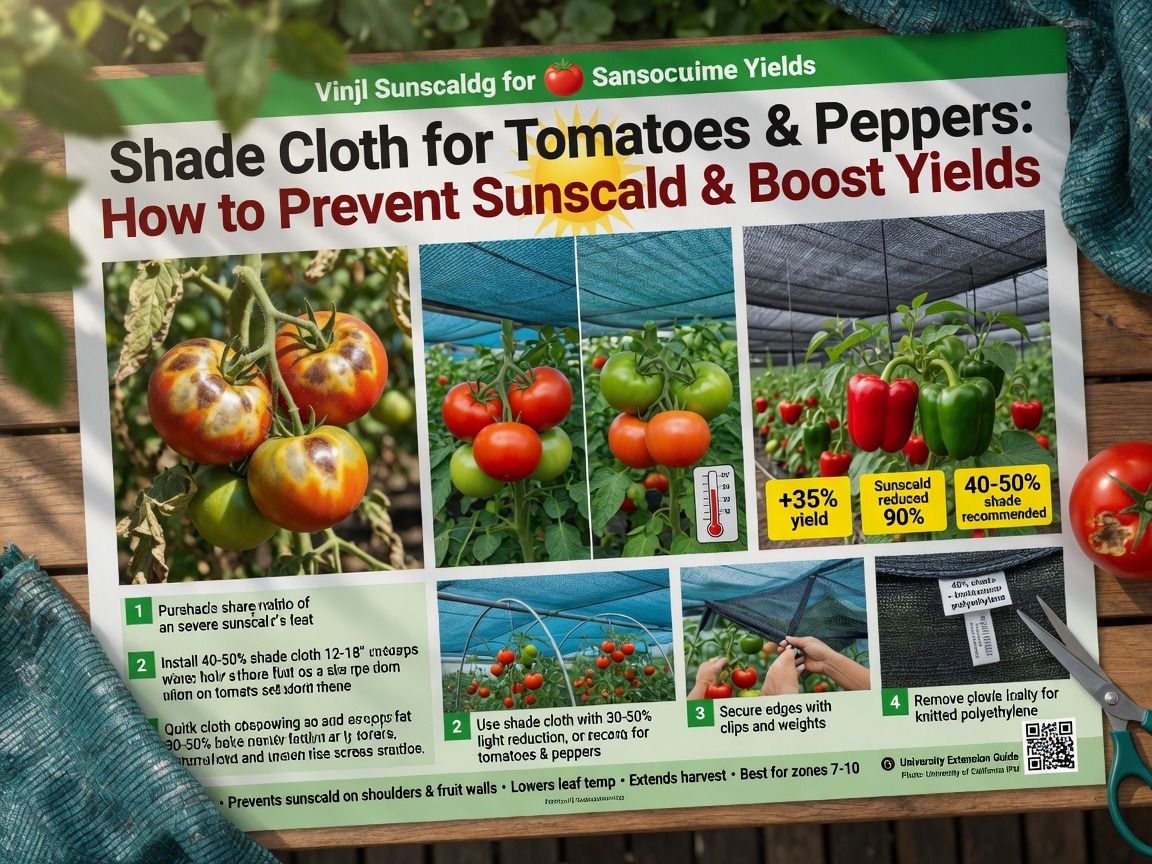
Tomatoes, peppers, eggplant: 30% — enough to prevent sunscald on fruit without reducing yield.
Strawberries: 30–40% — protects delicate fruit from sunburn while maintaining sweetness.
Orchids and ferns: 70–80% — these understory plants naturally grow in low-light forest conditions.
Succulents in extreme heat: 30% — surprisingly, most succulents need very little shade unless temperatures exceed 95°F (35°C) consistently.
Seed starting trays: 50% — protects fragile seedlings during their first two weeks outdoors ("hardening off").
Livestock and poultry shelters: 80–90% — prioritizes heat reduction over light transmission since animals don't need photosynthesis.
Step 2: Choose the Right Color
Color affects both light filtration and temperature regulation. While it might seem like a cosmetic choice, it actually changes how your garden cloth shade performs.
Black: The most common and affordable option. It provides strong UV blocking and heat reduction but can absorb more heat itself, which may slightly raise the ambient temperature underneath.
Green: Blends naturally into garden landscapes and offers a balanced light spectrum, popular for ornamental gardens.
White/Silver: Reflects more sunlight rather than absorbing it, keeping the area underneath cooler — ideal for extremely hot climates or greenhouse roofing.
Red or Blue (specialty colors): Some growers use tinted shade fabric to manipulate the light spectrum for specific plant growth stages, though this is more common in commercial operations.
For most home gardeners, black or green shade cloth for plants will cover 90% of use cases. Choose white or silver only if you're in a particularly hot region or growing heat-sensitive crops like lettuce in summer.
Step 3: Pick the Right Material and Quality
Not all shade cloth for gardens is created equal. The material determines how long it will last and how well it withstands wind, rain, and UV exposure.
Knitted vs. Woven Shade Cloth
Knitted shade cloth: More common and affordable, made from high-density polyethylene (HDPE). It won’t unravel if cut, resists tearing, and is lightweight enough for DIY installation.
Woven shade cloth: Denser and slightly heavier, often used in commercial agriculture. It offers excellent durability but can be more expensive and prone to fraying at cut edges unless hemmed.
What to Check Before Buying
UV stabilization: Look for cloth specifically treated to resist UV degradation — untreated material can become brittle and crack within a single season.
Weight (GSM): Heavier fabric (measured in grams per square meter) generally lasts longer and withstands wind better.
Reinforced edges: Grommets or hemmed borders make installation easier and prevent fraying over time.
Investing slightly more in high-quality shade fabric upfront often saves money in the long run, since cheap, untreated material may need replacing every year.
Step 4: Measure and Size Correctly
One of the most overlooked steps in choosing garden shade cloth is getting the size right. Measure the exact area you want to cover, then add extra material for:
Overhang: Leave 1–2 feet of extra fabric on each side for secure anchoring.
Airflow gaps: Avoid stretching the cloth completely flat against plants — a slight gap allows better air circulation.
Future expansion: If you're covering a growing garden bed, buy a slightly larger piece to accommodate plant growth throughout the season.
Most shade cloth for plants is sold either by the roll (allowing custom cutting) or as pre-made panels with finished edges and grommets — ideal for quick, no-sew installation over hoops or frames.
Step 5: Match Shade Cloth to Your Climate Zone
Beyond individual plant needs, your regional climate plays a huge role in determining the right shade cloth for gardens. Here's how to adjust your choice based on where you live:
Hot & Arid Climates (e.g., desert Southwest, Mediterranean regions)
Use 50–70% shade cloth as a baseline, even for sun-loving vegetables, since ambient heat alone can cause stress beyond what direct sun exposure would in milder zones.
White or silver shade fabric is strongly recommended to reflect heat rather than absorb it.
Consider double-layering during extreme heatwaves (above 100°F/38°C).
Humid Subtropical Climates (e.g., southeastern US, parts of Southeast Asia)
Moderate shade (30–40%) is usually sufficient since cloud cover and rainfall naturally reduce sun intensity.
Prioritize breathable, knitted shading cloth for plants to prevent fungal issues in already-humid air.
Temperate Climates (e.g., northern US, UK, parts of Europe)
Shade cloth is often only necessary during the peak 6–8 weeks of summer.
Lighter shade percentages (20–30%) work well, primarily to prevent bolting in cool-season crops that linger into warmer months.
High-Altitude & Intense UV Regions (e.g., mountainous areas, southern hemisphere summer zones)
UV intensity is often underestimated at altitude. Even in cooler temperatures, 40–50% shade cloth with strong UV stabilization is recommended to prevent leaf bleaching.
Step 6: Installation Methods for Different Garden Setups
How you install your garden shade cloth depends heavily on your existing structures. Here are the most common methods:
1. Hoop House / Row Cover Style
Best for vegetable beds and rows. PVC or metal hoops are inserted into the ground every 3–4 feet, and the shade cloth is draped over the top, secured with clips or clothespins. This method allows quick removal for harvesting or watering.
2. Frame-Mounted Panels
Ideal for permanent garden beds or greenhouse roofing. A wooden or metal frame is built around the perimeter, and pre-made shade cloth panels with grommets are attached using bungee cords, zip ties, or snap hooks. This offers the most durability and wind resistance.
3. Shade Sail Style
For larger patio gardens or seating areas combined with plant protection, a shade sail — a triangular or rectangular piece of shade fabric — is stretched between anchor points (posts, walls, or trees) at an angle, allowing rain runoff while providing broad coverage.
4. Draped Over Existing Structures
The simplest method: draping shade cloth for plants directly over a pergola, trellis, or fence line. While easy, this method offers less precise control over shade percentage exposure and may sag over time without additional support.
Installation Best Practices
Always secure edges tightly to prevent wind from lifting or tearing the material.
Leave at least 6–12 inches between the cloth and plant foliage to allow airflow and prevent heat buildup.
Use UV-resistant zip ties or clips rather than metal fasteners that can rust and stain the fabric.
Cost Comparison: Is Shade Cloth Worth the Investment?
Many gardeners hesitate to buy shade cloth for gardens, wondering if it's truly worth the upfront cost. Here's a breakdown to help you decide:
Protection Method
Average Cost
Lifespan
Effectiveness
Shade cloth (knitted, UV-treated) | $0.15–$0.40 per sq ft | 3–5 years | High, adjustable by percentage |
Row covers (fabric, non-woven) | $0.10–$0.25 per sq ft | 1–2 seasons | Moderate, mainly frost/pest protection |
Shade trees/natural shade | Free (if already present) | Permanent | Inconsistent, hard to control |
Umbrellas/temporary covers | $10–$50 per unit | 1–3 years | Low coverage area, manual labor |
Solid tarps/plastic sheeting | $0.05–$0.15 per sq ft | 1 season | Poor airflow, risk of overheating |
When you calculate cost-per-season, shade cloth for plants consistently offers the best return on investment for anyone gardening beyond a single year, thanks to its durability and reusability.
Maintenance and Care Tips
To maximize the lifespan of your garden shade cloth, follow these maintenance practices:
Clean regularly: Dust, pollen, and debris can reduce light filtration efficiency. Rinse with a garden hose or gently brush off buildup every few weeks.
Inspect for tears: Small rips can quickly grow larger under wind stress. Patch holes early using UV-resistant repair tape or by stitching with fishing line.
Store properly in the off-season: Fold or roll your shade fabric loosely (avoid tight creases that weaken fibers) and store it in a dry, shaded location away from rodents.
Avoid prolonged ground contact: Leaving shade cloth on the ground for extended periods can lead to mold growth or degradation from soil moisture.
Re-tension periodically: Over time, fabric can stretch slightly. Check anchor points monthly during peak season and re-tighten as needed.
With proper care, most quality shade cloth for plants will last 3–5 years, and premium woven versions can last even longer.
Common Mistakes to Avoid
Choosing shade percentage based on price alone — a cheaper 30% cloth won’t protect heat-sensitive plants in a scorching climate.
Installing shade cloth too close to plants — direct contact can trap heat and moisture, encouraging disease.
Ignoring UV stabilization — untreated cloth degrades quickly, costing more in replacements over time.
Leaving shade cloth up year-round — most plants still need full sun in cooler months; remove or adjust cloth as seasons change.
Overlooking wind exposure — in open or coastal areas, lightweight shade cloth without reinforced grommets can tear apart in a single storm.
Using the wrong knot or fastener — metal fasteners can rust and stain fabric; opt for UV-stable plastic clips or soft ties.
Troubleshooting Common Shade Cloth Problems
Problem: Plants are still wilting despite shade cloth installation.
Solution: Check if the shade percentage is too low for your climate, or if the cloth is positioned too high, allowing reflected heat from the ground to still stress plants. Consider increasing shade percentage or adding mulch underneath to reduce soil heat radiation.
Problem: Shade cloth keeps tearing at the edges.
Solution: This usually indicates insufficient reinforcement. Switch to panels with grommets, or reinforce DIY-cut edges with hemming tape before installation.
Problem: Mold or mildew appearing on the shade cloth itself.
Solution: Ensure adequate airflow by leaving gaps between the fabric and plant canopy, and avoid letting the material stay wet for extended periods without sun exposure to dry out.
Problem: Plants are growing leggy and weak under the shade cloth.
Solution: The shade percentage may be too high for the plant type. Reassess using the plant-specific shade percentage table above and consider switching to a lower percentage.
Shade Cloth vs. Other Protection Methods
It's worth understanding how shade cloth for gardens compares to alternative solutions, since some gardeners may benefit from a combined approach:
Shade cloth vs. row covers: Row covers are typically lightweight, non-woven fabric primarily used for frost and pest protection, with minimal sun-blocking capability. Shade cloth is specifically engineered for UV and heat reduction. For summer heat, shade cloth is the superior choice; for spring frost protection, row covers work better.
Shade cloth vs. shade trees: While natural shade from trees is free and aesthetically pleasing, it lacks precision — you can't adjust the percentage of light blocked, and root competition can affect nearby plants. Shade cloth offers complete control and can be installed or removed as needed.
Shade cloth vs. greenhouse shade paint: Some commercial greenhouses use shade paint applied directly to glass or polycarbonate panels. This is more permanent and harder to adjust seasonally compared to removable shade cloth for plants, which offers flexibility for changing weather patterns.
Quick Decision Checklist
Before you buy, ask yourself:
What are you growing, and how heat-sensitive is it?
What’s your local climate — mild, hot, or extreme?
Do you need a specific color for temperature control or aesthetics?
Is the material UV-stabilized and appropriately weighted for your region's wind conditions?
Have you measured your space accurately, including overhang?
Which installation method fits your existing garden structure?
Have you budgeted for long-term maintenance and eventual replacement?
Answering these questions will point you to the correct shading cloth for plants almost every time.
Final Thoughts
Choosing the right shade cloth for plants doesn’t have to be overwhelming. By focusing on shade percentage, color, material quality, proper sizing, climate considerations, and correct installation, you can protect your garden from heat stress while keeping plants healthy and productive all season long. Whether you're shielding delicate seedlings or protecting a full vegetable bed, the right garden shade cloth is an investment that pays off in stronger yields, less plant loss, and years of reliable use.
Ready to find your perfect match? Browse our range of shade cloth for gardens — available in multiple percentages, colors, and durable materials to fit any growing need.
FAQ Section
Q: What percentage shade cloth is best for vegetables?
A: Most vegetables do well with 30–50% shade cloth, which protects against scorching while still allowing enough light for fruit production.
Q: Can shade cloth be left on during rain?
A: Yes, most shade fabric is water-permeable and can remain in place during light rain, though heavy storms may require temporary removal to prevent pooling or structural strain.
Q: How long does garden shade cloth typically last?
A: UV-stabilized garden shade cloth typically lasts 3–5 years with proper care, while untreated materials may degrade within a single season.
Q: Can I use shade cloth in winter?
A: Generally not necessary, as most plants benefit from full sun during cooler months. However, in regions with intense winter UV (like high altitudes), light shade cloth can still help protect sensitive evergreens.
Q: Does shade cloth affect plant growth negatively?
A: Only if the shade percentage is too high for the plant's needs. Using the correct percentage based on plant type ensures healthy growth without legginess or reduced yield.
Q: What's the difference between shade cloth and shade fabric?
A: These terms are often used interchangeably. Both refer to the same category of woven or knitted material designed to filter sunlight for plant or structure protection.