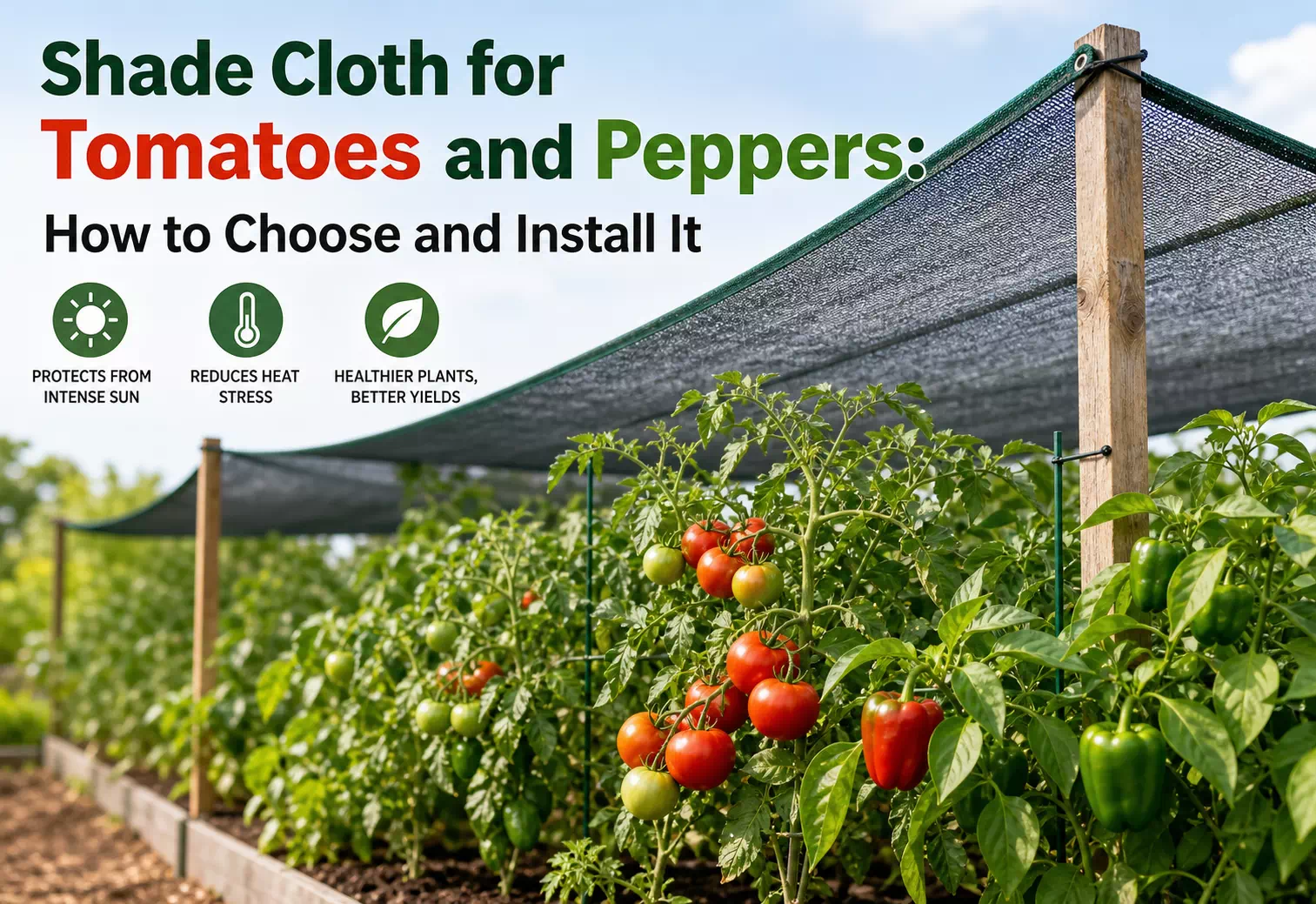
Tomatoes and peppers do not need the same greenhouse conditions in every climate. During periods of intense sun and high heat, shade cloth can help reduce direct radiation and make the growing environment easier to manage. But the cloth is not a substitute for ventilation, irrigation or temperature control. Choosing a dense shade cloth without fixing poor airflow can create a different problem instead of solving the first one.
The right choice depends on the crop, variety, season, greenhouse structure and installation method. This guide explains what to look at before buying shade cloth for tomatoes or peppers, how to compare internal and external installation, and what to monitor after the cloth is in place.
Short answer: Consider shade cloth when strong sunlight and high temperatures are putting stress on the crop. Start with the crop, climate and greenhouse conditions, then confirm the shade percentage, color, width and installation method. For a large order, test a representative sample before finalizing the specification.
Do Tomatoes and Peppers Need Shade Cloth?
Sometimes. The need is usually seasonal rather than permanent.
A greenhouse may benefit from shade protection when the crop is exposed to intense midday or afternoon sun, when the growing area becomes difficult to cool, or when flowers and fruit are exposed to excessive heat and direct radiation. These signs do not point to one cause by themselves. Water supply, humidity, ventilation and disease pressure should also be checked before changing the shading system.
A useful first step is to observe the crop at different times of day. Record what happens in the morning, around midday and in the afternoon. Note the greenhouse temperature, airflow, leaf condition and whether the most exposed plants behave differently from plants in shaded areas.
This simple record is more useful than choosing a shade cloth because another grower uses the same product. Conditions vary widely between regions and greenhouse designs.
Tomatoes and Peppers: What Should You Watch For?
Tomatoes and peppers are both warm-season crops, but the practical shading decision still depends on the variety, crop stage and production environment. The following comparison is a starting point for planning, not a universal growing prescription.
| Consideration | Tomatoes | Peppers |
| Main concern during hot weather | Heat stress, excessive direct exposure and fruit quality | Heat stress, flowering and fruit set |
| Important growing stages | Flowering, fruit development and ripening | Flowering, fruit set and fruit development |
| What to observe | Leaf response, flower retention and exposed fruit | Leaf response, flowering, fruit set and humidity |
| Key greenhouse factor | Light balance and ventilation | Heat control and stable airflow |
| Shade decision depends on | Variety, climate, season and greenhouse design | Variety, climate, season and greenhouse design |
When Should You Consider Shade Cloth?
During the hottest part of the season
If the greenhouse becomes excessively hot during peak summer, a shade system may help reduce the amount of direct solar radiation entering the growing area. The useful question is whether the shading can be adjusted as weather conditions change.
A permanent cloth may be practical for a structure with a stable production schedule. A removable, roll-up or sectional system may be better when the greenhouse is used across several seasons.
In regions with strong sunlight
A greenhouse located in a hot, bright region may need more protection than a similar greenhouse in a cloudy or mild area. Afternoon exposure deserves particular attention because one side of the greenhouse may receive much stronger direct sun than the other.
Before increasing the shade level, check whether the structure has enough roof and side ventilation. More shade will not remove hot air that has nowhere to go.
During flowering and fruit development
High temperatures can make flowering and fruit development more difficult to manage. This is a period when growers should pay closer attention to the crop and the greenhouse environment.
Do not assume that shade cloth alone will solve flower or fruit problems. Check water availability, humidity, air movement, nutrient management and night temperatures as well. The purpose of the cloth is to help manage the light and heat environment as part of the wider system.
For young plants and newly transplanted crops
Young plants may be more sensitive to sudden exposure to intense sunlight. Temporary or adjustable shade can be useful during establishment, especially when the same greenhouse later needs to provide more light.
Monitor the plants after installation. If growth becomes weak in cloudy weather or the growing area remains too humid, the system may need adjustment.
How to Choose Shade Percentage for Tomatoes and Peppers
There is no single shade percentage that works for every tomato or pepper greenhouse. Use the following order when making the decision.
First, identify the crop and growing stage
Write down the crop variety, planting date and current stage. A seedling house, a greenhouse in active flowering and a greenhouse close to harvest may not have the same shading requirements.
If you grow several varieties, do not assume they will all respond in exactly the same way. Separate zones or adjustable coverage may be worth considering for a commercial project.
Next, evaluate the local climate
Consider the strength and duration of direct sunlight, the hottest months, humidity, wind and seasonal cloud cover. The same nominal shade percentage can create different results under different conditions.
A low-light region may require a more conservative shading approach. A high-sun region may need stronger protection during selected periods. Local growing records or advice from a horticultural specialist can help establish a starting point.
Then, check the greenhouse ventilation
Look at the roof vents, side vents, circulation fans and exhaust fans. Make sure the planned cloth will not block access or restrict essential airflow.
If the greenhouse is already struggling with trapped heat, address ventilation before simply increasing shade. Otherwise, it becomes difficult to know whether the crop is responding to the cloth or to the change in humidity and air movement.
Finally, decide whether the system should be fixed or adjustable
A fixed shade cloth is straightforward when the same conditions are maintained throughout the production cycle. Adjustable, removable or sectional systems provide more control when sunlight and crop requirements change.
For a greenhouse used year-round, consider whether roof and side sections should be managed separately. A supplier or installer will need the structure dimensions and fixing points before recommending a practical format.
Black, White or Green Shade Cloth?
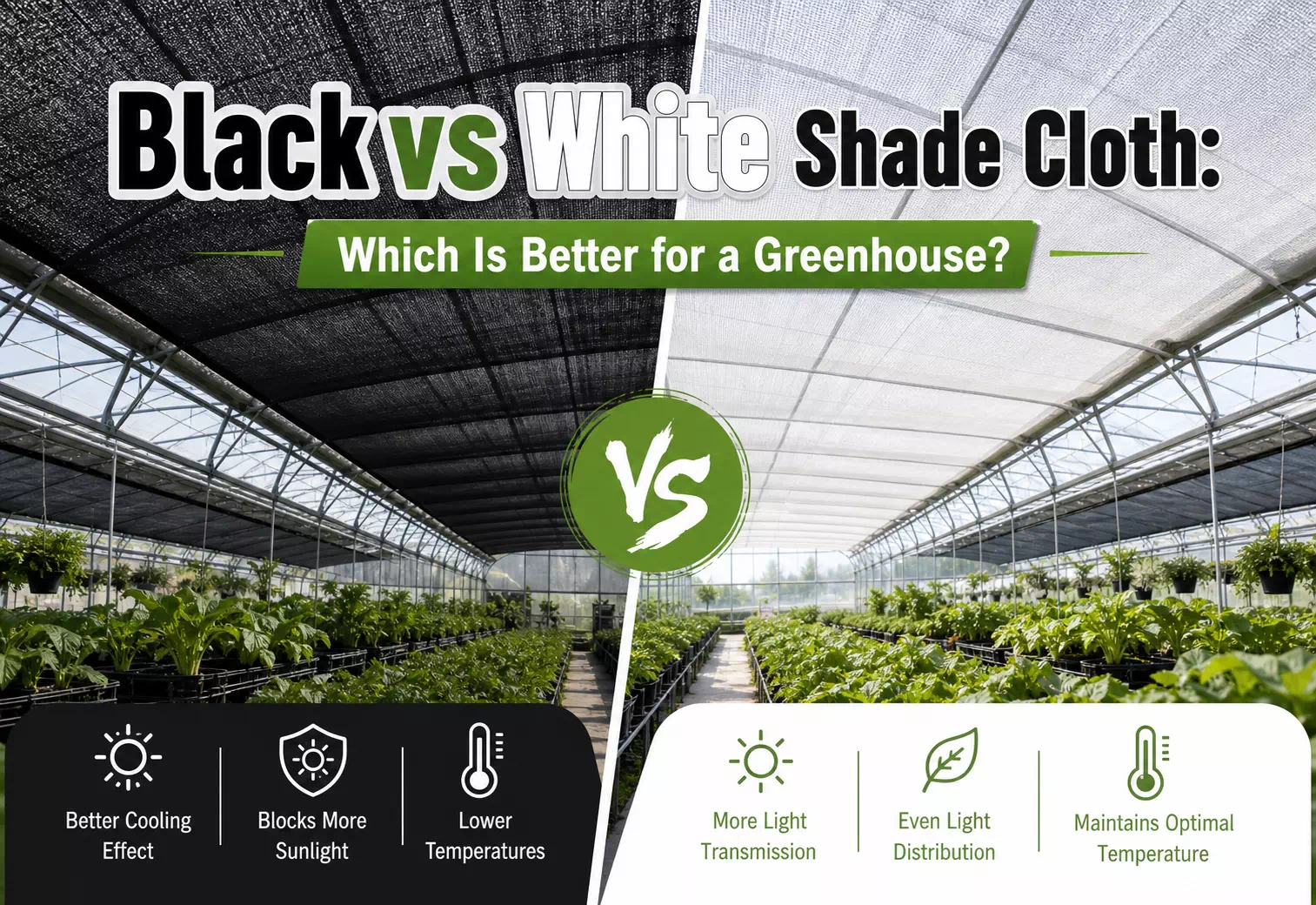
Color is important, but it should not be considered before shade percentage and installation conditions. Black, white and green shade cloths may all be suitable for different projects, depending on the light environment, appearance requirements, crop and climate.
Do not assume that a black cloth always provides more shading or that a white cloth always keeps a greenhouse cooler. Actual performance depends on the material, shade percentage, weave, installation position and ventilation.
When comparing colors, ask the supplier for comparable samples and specifications. Try to keep the shade percentage, size and installation conditions as similar as possible during the comparison.
Internal vs External Shade Cloth Installation
Internal installation
Internal shade cloth is installed inside the greenhouse, usually below the roof covering. It can be convenient when the structure has already been built and the grower needs a shading system that can be removed or adjusted from inside.
Before choosing internal installation, check the available space, fixing points, service access and interaction with vents, fans and irrigation equipment. The cloth should not interfere with routine crop work.
External installation
External shade netting is installed above the greenhouse, intercepting sunlight before it passes through the greenhouse covering. It may be useful for projects where the main concern is strong direct sun on the roof.
External systems need careful attention to wind, edge fastening, tension, drainage, access and maintenance. The greenhouse structure must be suitable for the proposed fixing method. A loose or poorly secured cloth can become a maintenance problem in windy weather.
Neither method is automatically better. The correct choice depends on the structure, local weather, installation budget, seasonal use and the level of control required.
Installation Tips for a Tomato or Pepper Greenhouse
A good product can still perform poorly if it is measured or fixed incorrectly. Before installation:
1.Measure every roof and side section that will be covered.
2.Mark doors, vents, fans, pipes and service areas on the layout.
3.Decide whether the cloth will be fixed, removable, retractable or divided into sections.
4.Confirm the required allowance for edges, overlaps and fastening.
5.Use a fixing method that suits the greenhouse structure and local wind conditions.
6.Keep the material evenly tensioned without overstretching it.
7.Make sure vents and access points remain usable.
8.Inspect the system after strong wind, heavy rain or maintenance work.
Do not estimate the order quantity from greenhouse floor area alone. Roof curves, slopes, side coverage and overlap can make the actual material requirement different from the floor dimensions.
A simple planning formula is:
Required material area = measured coverage area + installation allowance + overlap allowance
The correct allowance depends on the structure and fastening method. Confirm the final quantity with the installer or supplier before production.
What to Monitor After Installation
The first few days after installing shade cloth are a good time to observe the crop closely. Compare conditions with your records from before installation.
Pay attention to:
•Temperature during the hottest part of the day.
•Leaf condition in exposed and less-exposed areas.
•Humidity and visible condensation.
•Air movement near the roof, sides and crop canopy.
•Flower retention and fruit set.
•Fruit exposed to direct sunlight.
•Plant growth during cloudy periods.
•Whether the cloth restricts ventilation or access.
If the greenhouse is cooler but noticeably darker, humid or poorly ventilated, the system may need adjustment. If the crop continues to show heat stress, inspect water supply, fans, vents and the installation position before ordering a denser cloth.
The goal is not to create the darkest greenhouse. The goal is to create a growing environment that the crop can use consistently.
Common Mistakes to Avoid
Using one shade level for the entire year
The hottest period, the cloudy season and the early growing stage may place different demands on the greenhouse. If the production schedule changes, a fixed system may become restrictive.
Choosing by crop name alone
“Tomato shade cloth” and “pepper shade cloth” are useful search terms, but they do not replace information about variety, climate, greenhouse design and season.
Ignoring ventilation
A cloth may reduce direct sunlight but cannot remove humid or hot air. Check vents and fans before increasing the shade level.
Blocking the greenhouse openings
Roof vents, side vents and service access should be included in the installation plan. Do not cover them accidentally or make them difficult to operate.
Buying without measuring the structure
A product may have the desired shade percentage but be difficult to install if its available width, length or edge treatment does not suit the greenhouse.
Skipping sample testing for a large order
A sample will not reproduce every seasonal condition, but it can help you compare color, handling, fixing and basic light conditions before committing to a bulk purchase.
Frequently Asked Questions
Is shade cloth good for tomato plants?
It can be useful during periods of intense sunlight and high heat, especially when direct exposure is creating stress in the greenhouse. The right choice depends on the crop, climate, ventilation, season and installation method. It should be used together with broader crop and greenhouse management.
Do peppers need shade in a greenhouse?
Some pepper greenhouses may benefit from shade during hot, bright periods. The decision should be based on local conditions and crop observations rather than the crop name alone.
Should shade cloth be installed inside or outside the greenhouse?
Both options can work. Internal installation may be easier to adjust or maintain in some structures, while external installation may intercept direct sunlight before it reaches the greenhouse covering. Wind, fixing, structure, access and maintenance must be considered.
Can shade cloth prevent tomato sunscald?
Shade cloth may help reduce excessive direct exposure, but it should not be presented as a guaranteed solution. Water management, canopy cover, variety, temperature and ventilation may also influence fruit condition.
What color shade cloth is suitable for tomatoes and peppers?
Black, white and green options may be suitable in different applications. Compare the color together with shade percentage, material, installation position and local conditions. A sample comparison is useful for commercial projects.
Should I use the same shade cloth throughout the season?
Not necessarily. A fixed cloth may suit a stable production schedule, while removable, retractable or sectional coverage may be more practical when sunlight and crop stages change.
Final Recommendation
For tomatoes and peppers, shade cloth selection should start with the growing environment, not with a product color or a single percentage copied from another greenhouse.
Identify the crop and growth stage. Check the local sunlight, hottest part of the day, greenhouse ventilation and installation position. Then compare shade percentage, color, material, width, construction and fastening requirements. After installation, continue watching temperature, humidity, airflow and crop response.
Need help choosing shade netting for tomatoes or peppers? Send Dawei your crop, location, greenhouse dimensions, preferred installation method, shade percentage, color and estimated quantity. The team can review the application and help confirm a suitable specification for quotation.
About Dawei Shade Net Co., Ltd.
Dawei Shade Net Co., Ltd. is a China-based manufacturer of shade nets and agricultural protection products. Its listed range includes black, green, white and other shade net options, together with flat-wire and round-wire constructions. The company also presents solutions for agricultural nets, insect-proof nets, hail protection nets, dust-proof nets, safety nets and greenhouse covering applications.
For current product specifications, samples, OEM/ODM requirements and wholesale quotations, contact the Dawei team directly.