Extreme summer heat, scorching sun, and intense UV rays can quickly devastate vulnerable crops, stunt plant growth, and ruin months of hard work. Whether you are managing a large-scale commercial plant nursery, running an agricultural farm, or tending to a backyard vegetable plot, installing a high-quality garden shade cloth is one of the most effective ways to regulate ambient temperature, optimize plant health, and boost crop yields.
However, not all shading fabrics are created equal. Choosing the wrong density or a subpar material can lead to plant starvation or frequent replacements. In this comprehensive guide, we will break down how to choose the right shade cloth for plants, analyze the performance of different garden shade cloth material options, and show you how to properly deploy a greenhouse shade cloth for maximum efficiency.
Why Your Plants Need a Garden Cloth Shade
Different plants require different microclimates and levels of sunlight to thrive. Utilizing shade cloth shades isn’t just about blocking out light; it is about creating an engineered environment that protects crops from extreme weather stresses.
When you upgrade your garden with shade cloth protection, you unlock several critical agronomic benefits:
Prevents Sunscald and Scorching: It shields sensitive leaves, stems, and fruits (such as tomatoes, bell peppers, and leafy greens) from getting scorched during peak afternoon hours ($12\text{:00 PM} - 4\text{:00 PM}$).
Reduces Water Evaporation: A reliable shade cloth for garden beds lowers soil and air temperatures, keeping the soil moist for longer periods. This significantly cuts down on your irrigation frequency, water costs, and nutrient leaching.
Optimal Temperature Control: High-quality shading fabrics can reduce the ambient temperature underneath by $5^\circ\text{C}$ to $12^\circ\text{C}$, preventing heat stress in heat-sensitive or cool-season crops.
Hail and Wind Protection: Beyond blocking the sun, a sturdy net acts as a buffer against sudden summer hailstorms, heavy downpours, and disruptive wind gusts.
Understanding Garden Shade Cloth Material: Knitted vs. Woven
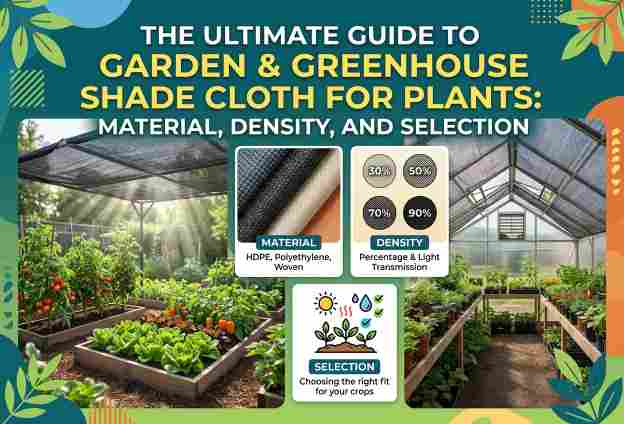
When searching for the best garden cloth shade solutions, the material construction is the most crucial factor determining lifespan and usability. Most professional-grade commercial options are manufactured from HDPE (High-Density Polyethylene), but they are constructed using two distinct methods: Knitted and Woven.
Feature | Knitted HDPE Shade Cloth | Woven Polyethylene Shade Cloth |
Manufacturing Process | Lock-stitch knitted design | Traditional warp-and-weft weaving |
Durability & Strength | High (Will not unravel if cut, punctured, or torn) | Medium (Can fray and unzip over time if ripped) |
Lifespan | 5–8+ Years (Highly UV stabilized) | 2–3 Years (Prone to UV degradation) |
Best Used For | Greenhouse shade cloth, vegetable gardens, patios | Temporary shading, windbreaks, privacy screens |
Flexibility & Weight | Lightweight, highly stretchable, and pliable | Heavy, rigid, and less flexible |
Resilience to Chemicals | Highly resistant to horticultural sprays | Moderate resistance |
How to Choose the Right Density for Your Greenhouse Shade Cloth
If you are installing a shade cloth for greenhouse structures, choosing the right density—measured by the shade percentage—is critical. Selecting a density that is too high will starve your crops of the light needed for photosynthesis, while a percentage too low will offer insufficient heat relief.
Shade cloth percentages represent the amount of light blocked by the fabric. For example, a 40% shade cloth allows 60% of solar radiation to pass through. Use this detailed reference guide to match your specific plant types with the correct density:
1. 30% to 40% Shade Density
Best Plant Matches: Heat-tolerant vegetables like tomatoes, peppers, eggplants, cucumbers, squash, and melons.
Application: Ideal for standard agricultural fields and solar-loving crops that need just enough protection to prevent sunscald without stunting fruit development.
2. 50% to 60% Shade Density
Best Plant Matches: General garden shade cloth use, plant nurseries, leafy greens (lettuce, spinach, kale), orchids, camellias, and various flowering house plants.
Application: The sweet spot for most backyard gardeners and commercial nurseries located in extremely hot regions. It balances robust cooling with adequate light penetration.
3. 70% to 90% Shade Density
Best Plant Matches: Non-plant applications or highly shade-loving ferns.
Application: Primarily used for human comfort and asset protection, such as patio covers, pergolas, privacy fencing, vehicle parking shelters, and livestock housing.
Step-by-Step Guide: Designing a Successful Garden with Shade Cloth
To ensure your investment pays off and survives harsh seasonal winds, follow these expert installation best practices:
Measure and Account for Sag: When measuring your shade cloth for garden hoops or greenhouse frames, allow for a 2-3% fabric stretch.
Choose the Right Supports: For backyard raised beds, use UV-resistant PVC hoops or steel EMT conduits to create a supportive structure above the plants. For commercial greenhouses, drape the cloth over the external glazing or attach it to internal tracking systems.
Secure with Heavy-Duty Accessories: Always fasten your shade cloth using professional shading net clips, zip ties, or built-in aluminum grommets. Securing the edges tightly prevents flapping, friction damage against frames, and premature tearing during high winds.
Provide Adequate Clearance: Maintain at least 20-30 cm of clearance between the shade cloth and the top of your plants to ensure proper airflow and prevent heat pockets from forming right above the foliage.
Frequently Asked Questions (FAQ)
Q: What color shade cloth is best for a greenhouse?
A: Black and Green are the most widely recommended colors for a greenhouse shade cloth. Black absorbs more heat but offers excellent cross-ventilation light control and high UV resistance. Green blends seamlessly into natural garden landscapes. For maximum cooling, White shade cloths reflect heat and infrared rays away, making them popular for specific flowering varieties and indoor nurseries, though they show dirt more easily.
Q: Can I cut garden shade cloth without it fraying?
A: Yes, provided that the product is made from knitted HDPE material. The knitted lock-stitch design prevents tearing and fraying from the cut edge, making it the perfect choice for custom shade cloth for garden DIY sizing and framing. Woven materials, on the other hand, will quickly unweave if cut without singing the edges.
Q: Should I install my greenhouse shade cloth inside or outside?
A: Exterior installation is highly recommended for cooling purposes. Putting the shade cloth for greenhouse structures on the outside blocks the solar radiation before it passes through the glass or plastic film, keeping the structure significantly cooler. Interior installations help filter light but trap heat inside the greenhouse envelope.
Conclusion: Protect Your Yield with the Right Shading System
Investing in a premium shade cloth for greenhouse or garden setups is the easiest way to guarantee a bountiful harvest, save water, and extend your growing season into the hottest months of the year. By choosing a high-density, UV-stabilized knitted HDPE fabric, you ensure that your crops stay protected year after year.