Introduction: Why Garden Protection Matters More Than Ever
Every year, farmers and home gardeners lose up to 40% of their harvest to birds, insects, and unpredictable weather. Whether you grow tomatoes on your balcony, manage a fruit orchard, or run a commercial greenhouse, one truth remains the same:
Unprotected crops = lost profits and wasted effort.
The good news? You don't need harmful chemicals or expensive equipment to protect your garden. With the right combination of rain shelters, bird netting, insect nets, and waterproof shade cloth, you can shield your plants from nearly every threat—naturally and affordably.
In this complete guide, we'll walk you through:
How each type of garden protection works
When and where to use them
How to choose the right product for your needs
Installation tips and common mistakes to avoid
Let's dive in.
1. Rain Shelter: Shielding Crops from Weather Damage
What Is a Rain Shelter?
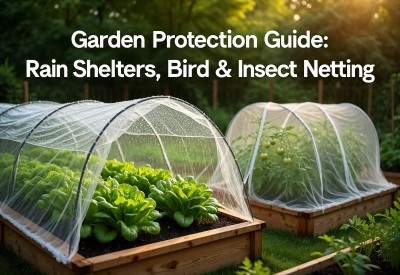
A rain shelter is a protective structure—usually made of transparent plastic film or waterproof fabric—that covers your crops to prevent damage from heavy rainfall, hail, and excess moisture.
Unlike full greenhouses, rain shelters are open on the sides, allowing natural airflow while keeping the tops of your plants dry.
Why Your Garden Needs a Rain Shelter
Excessive rain causes:
Fungal diseases (blight, mildew, root rot)
Cracked fruits (especially tomatoes, cherries, grapes)
Soil erosion & nutrient loss
Increased pest activity in wet conditions
Best Crops for Rain Shelter Protection
| Crop Type | Benefit |
|---|---|
| Tomatoes | Prevents blight & cracking |
| Berries (strawberries, blueberries) | Extends harvest season |
| Grapes | Reduces fungal infections |
| Leafy greens | Prevents waterlogging |
| Herbs | Maintains flavor concentration |
Types of Rain Shelters
Tunnel-Style Rain Shelter – Best for row crops
A-Frame Rain Shelter – Ideal for individual plants or small beds
Retractable Rain Shelter – Flexible use for commercial farms
Pro Tip: Choose UV-stabilized plastic film that lasts 3-5 years, and make sure your structure has enough slope to drain water effectively.
2. Bird Netting: Save Your Fruits from Birds
The Bird Problem
Birds can destroy an entire harvest in just a few days. Sparrows, starlings, and pigeons especially love:
Cherries, berries, and grapes
Corn and sunflower seeds
Tender young seedlings
Bird netting is the most effective, humane, and eco-friendly way to keep birds away without harming them.
How Bird Netting Works
Bird netting creates a physical barrier between birds and your plants. Made from lightweight, durable polyethylene or nylon, it allows sunlight, rain, and pollinators (like bees) to pass through—while keeping birds out.
Choosing the Right Bird Net
| Feature | Recommendation |
|---|---|
| Mesh Size | 15-19 mm (small enough to block most birds) |
| Material | UV-resistant HDPE or nylon |
| Color | Black (most durable, blends with foliage) |
| Lifespan | 5-10 years with proper care |
How to Install Bird Netting (Step-by-Step)
Measure your area (add extra 30 cm on each side)
Set up support poles or a frame above the plants
Drape the netting over the structure—don't let it touch the leaves
Secure the edges to the ground with pegs or clips
Inspect regularly for holes or trapped wildlife
3. Insect Net: Chemical-Free Pest Control
Why Insect Netting Is a Game-Changer
With more gardeners moving toward organic and chemical-free growing, insect netting has become one of the smartest investments you can make. It physically blocks harmful insects without pesticides—protecting both your crops and pollinators.
What Pests Does Insect Netting Block?
Cabbage moths & butterflies
Whiteflies & aphids
Grasshoppers & leaf miners
Beetles (including Japanese beetles)
Fruit flies & thrips
Choosing the Right Mesh Size
Mesh size is everything. Choose based on the pest you want to block:
| Mesh Size | Blocks | Best For |
|---|---|---|
| 0.15 mm | Thrips, whiteflies, tiny insects | Greenhouses, high-value crops |
| 0.4 mm | Aphids, fruit flies | Vegetable gardens |
| 0.8 mm | Cabbage moths, larger insects | Brassicas, leafy greens |
| 1.35 mm | Birds & large insects | Fruit trees |
Where to Use Insect Netting
Vegetable gardens – Cover beds with hoops
Greenhouses – Install on vents and doors
Fruit trees – Wrap around branches during fruiting
Commercial farms – Cover tunnels & shade houses
Pro Tip: Install insect netting before pests appear—not after. Prevention is far more effective than removal.
4. Waterproof Shade Cloth: The 2-in-1 Solution
What Makes Waterproof Shade Special?
Waterproof shade cloth combines two powerful functions:
Blocks harmful UV rays (up to 90% shade rate)
Repels rainwater (unlike traditional shade cloth)
This makes it perfect for outdoor spaces where you need both sun protection and weather resistance.
Top Uses for Waterproof Shade Cloth
| Application | Benefit |
|---|---|
| Patios & pergolas | All-weather outdoor comfort |
| Plant nurseries | Protects seedlings from sun & rain |
| Parking areas | Shields vehicles |
| Livestock shelters | Keeps animals cool & dry |
| Outdoor markets | Weatherproof workspace |
How to Choose the Right Waterproof Shade
Shade Rate: 70%–95% depending on your needs
Material: HDPE with waterproof coating
UV Protection: Look for UV-stabilized options
Reinforced Edges: Prevents tearing at grommets
5. Comparison Table: Which Product Do You Need?
| Protection Type | Blocks Rain | Blocks Birds | Blocks Insects | Provides Shade | Best For |
|---|---|---|---|---|---|
| Rain Shelter | ✅ | ❌ | ❌ | Partial | Wet climates, sensitive crops |
| Bird Netting | ❌ | ✅ | ❌ | ❌ | Fruit trees, berry bushes |
| Insect Net | ❌ | Partial | ✅ | Slight | Organic vegetable gardens |
| Waterproof Shade | ✅ | ❌ | ❌ | ✅ | Patios, nurseries, livestock |
6. Common Mistakes to Avoid
Using the wrong mesh size – Too large = pests get in; too small = poor airflow
Installing too late – Set up protection before pest season or rainfall
Letting netting touch plants – Causes damage and entangles birds
Skipping ventilation – Overheating can kill plants faster than pests
Buying cheap, non-UV materials – They degrade in weeks
7. Frequently Asked Questions (FAQs)
Can I use bird netting and insect netting together?
Yes! Layering them provides comprehensive protection. Use bird netting on the outside and finer insect mesh underneath for full coverage.
How long does garden netting last?
Quality UV-stabilized netting lasts 5–10 years, while premium waterproof shade cloth can last 7–12 years with proper care.
Will insect netting block pollinators like bees?
Yes—insect netting blocks bees too. For crops that need pollination (like tomatoes or cucumbers), remove the netting during flowering or hand-pollinate.
Do rain shelters cause overheating?
Modern rain shelters are designed with open sides for ventilation. Choose light-diffusing film to prevent heat buildup.
Is waterproof shade cloth better than a tarp?
Absolutely. Waterproof shade cloth allows some airflow, resists UV damage, and lasts far longer than plastic tarps.
8. Conclusion: Build a Fortress for Your Garden
Protecting your garden isn't just about saving crops—it's about saving your time, effort, and investment. By combining the right protection tools:
Rain shelters shield from weather damage
Bird netting stops feathered thieves
Insect nets enable chemical-free growing
Waterproof shade cloth delivers all-weather comfort
You'll enjoy healthier plants, bigger harvests, and less stress—season after season.
Ready to Protect Your Garden?
Explore our full range of rain shelters, bird netting, insect nets, and waterproof shade cloth—engineered for durability, UV resistance, and long-lasting performance.
Shop Now Get a Free Quote