Introduction
Shade nets may look simple, but the difference between a good one and a bad one can directly affect crop yield, labor input, and long-term costs.
In a market filled with mixed-quality products, identifying a truly reliable shade net requires more than comparing prices or weight. Here’s a concise yet comprehensive guide to help growers make smarter purchasing decisions.
The Three Core Indicators of a High-Quality Shade Net
Regardless of whether the net is flat-knitted or warp-knitted, premium products always share three essential characteristics:
1. High Tensile Strength
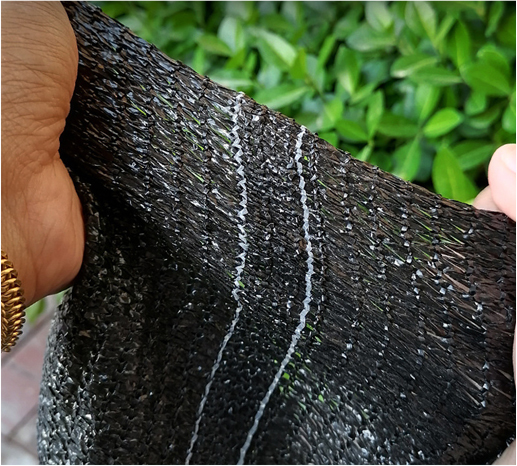
A strong shade net resists pulling, tearing, and wind pressure—especially important in open-field installations.
2. Effective Shading Performance
The material should provide consistent light diffusion and UV blocking, protecting crops from excessive heat and direct sunlight.
3. Long Service Life
Quality nets withstand UV degradation, weather exposure, and daily wear. A longer lifespan directly reduces replacement cost.
Common Misconceptions When Buying Shade Nets
A widely believed myth in the agricultural market is:
“A heavier shade net must be better.”
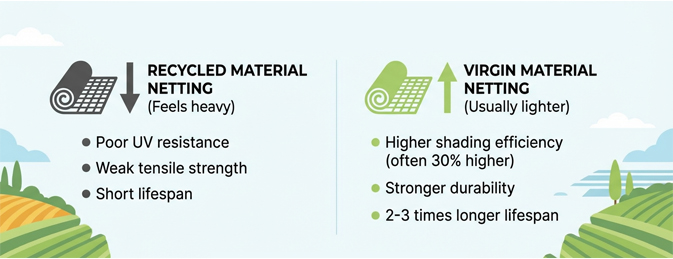
This is misleading. Just like iron is heavier than copper, but not better, weight alone says nothing about material quality.
1. Recycled-material nets may feel heavy, but usually have:
● Poor UV resistance
● Weak tensile strength
● Short lifespan
2. Virgin-material nets are often lighter, yet provide:
● Better shading efficiency (often 30% higher)
● Stronger durability
● 2–3 times longer service life
So, when it comes to weight—don’t be fooled.
How to Identify a Good Shade Net: A Simple Three-Step Check
1. Visual Check
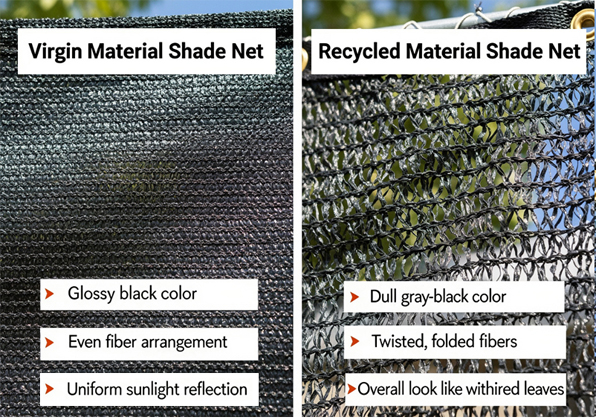
Look at the net surface and fiber structure.
Virgin material:
● Glossy, clean black
● Fibers arranged evenly
● Reflects sunlight uniformly
Recycled material:
● Dull grayish-black
● Twisted, folded fibers
● Overall appearance resembles “withered leaves”
2. Touch & Stretch Test
Your hands can tell more than you think.
High-quality nets:
● Smooth surface
● Flexible, elastic
● Hard to snap when pulled
Low-grade nets:
● Stiff, rough texture
● Produces a scratchy friction sound when handled
3. Smell Test
An often-overlooked but reliable indicator.
Recycled nets:
● Strong chemical or “fishy” smell
● Noticeable upon unsealing
Virgin nets:
● Mild, neutral plastic scent
Conclusion
A properly chosen shade net doesn’t just reduce sunlight—it enhances crop quality, stabilizes microclimates, reduces heat stress, and protects your investment for years.
Knowing how to distinguish quality ensures every dollar spent delivers reliable performance throughout the growing season.